
Finding a reliable window tinting company in the UK often feels like a bit of a gamble. You do a quick search, and suddenly you’re staring at a list of businesses that seem more interested in pimping out a hatchback than protecting a multi-million-pound residence in the Chilterns. While we have nothing against a sleek set of alloys, there is a massive—and potentially expensive—difference between sticking film on a car window and treating the high-performance glass in a modern home.
At BucksTinting, we don’t do cars. We don’t do vans. We don't even do the occasional tractor. We are dedicated window film specialists UK homeowners trust because we focus exclusively on the science of buildings. When you hire us, you aren’t just getting a "tinter"; you’re engaging an Architectural Glazing Consultant.
The Architectural Glazing Consultant vs. The High-Street Tinter
The term "tinter" is a bit of a holdover from the 90s. It conjures up images of dusty workshops and rolls of purple-fading film. In the world of premium residential property, that approach simply doesn't cut it. Modern homes from Oxford to London and Northampton to Guilford feature complex glass specifications: Low-E coatings, argon-filled cavities, and toughened safety glass.
An Architectural Glazing Consultant understands the thermal stress levels of your specific window. Applying the wrong film to a high-end double-glazed unit can, quite literally, cause the pane to crack under thermal expansion. A professional window tinting company doesn't just look at the shade; they calculate the solar absorption rates to ensure the installation is safe for the long term.
The Science of Glass: Thermal Stress and the "Invisible" Danger
When we talk about glass, we aren't talking about a single, inert material. Modern architectural glazing is a sophisticated sandwich of technology. If you live in a new-build estate in Buckinghamshire, your windows likely have a "Low-E" (Low Emissivity) coating. This is a microscopically thin layer of metal designed to reflect heat back into the room during winter.
The problem arises when you apply a standard privacy film or solar control layer without checking the glass type first.
What is Thermal Stress?
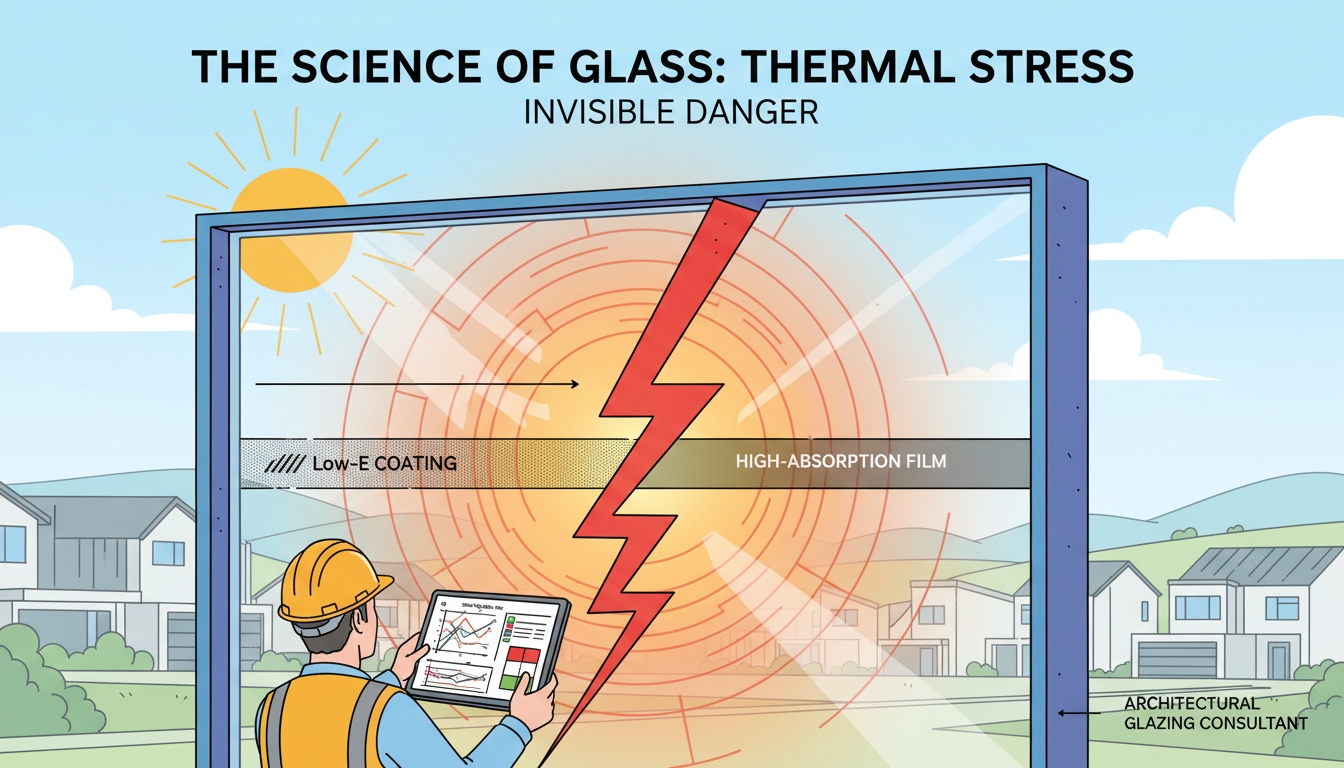
Every window has a breaking point. When the sun hits a pane of glass, the centre of the pane heats up and expands. However, the edges of the glass—hidden inside the frame—remain cooler. This temperature difference creates "thermal stress."
If a window tinting installers team applies a high-absorption film to an annealed (standard) glass unit that is already under pressure from a Low-E coating, the stress can exceed the glass's structural integrity. The result? A jagged crack that looks like a lightning bolt across your lounge. As an Architectural Glazing Consultant, I use thermal stress compatibility charts for every film installation to ensure the film and the glass work in harmony.
Safety and Security: Upgrading to BS EN 12600 Standards
One of the most overlooked benefits of hiring a professional window tinting company is the massive jump in safety. In the UK, building regulations (Document K) require glass in "critical locations"—like doors and low-level windows—to be safety glass.
If your home was built a few decades ago, you might still have large panes of "float glass." If a child trips or a stray football hits these windows, they shatter into dangerous, dagger-like shards.
The Invisible Shield
A professional safety and security film installation essentially turns your existing window into laminated glass. We apply a heavy-duty, multi-layered film that is chemically bonded to the glass surface. In the event of an impact, the glass may crack, but the film holds the shards firmly in place.
We ensure our safety films meet BS EN 12600 compliance. This is a European standard that classifies the impact resistance of glass. By opting for a professional window film, you are effectively retrofitting your home with high-level protection without the messy and expensive costs of replacing the entire window frame.
Why We Don’t Do Cars (And Why You Should Care)
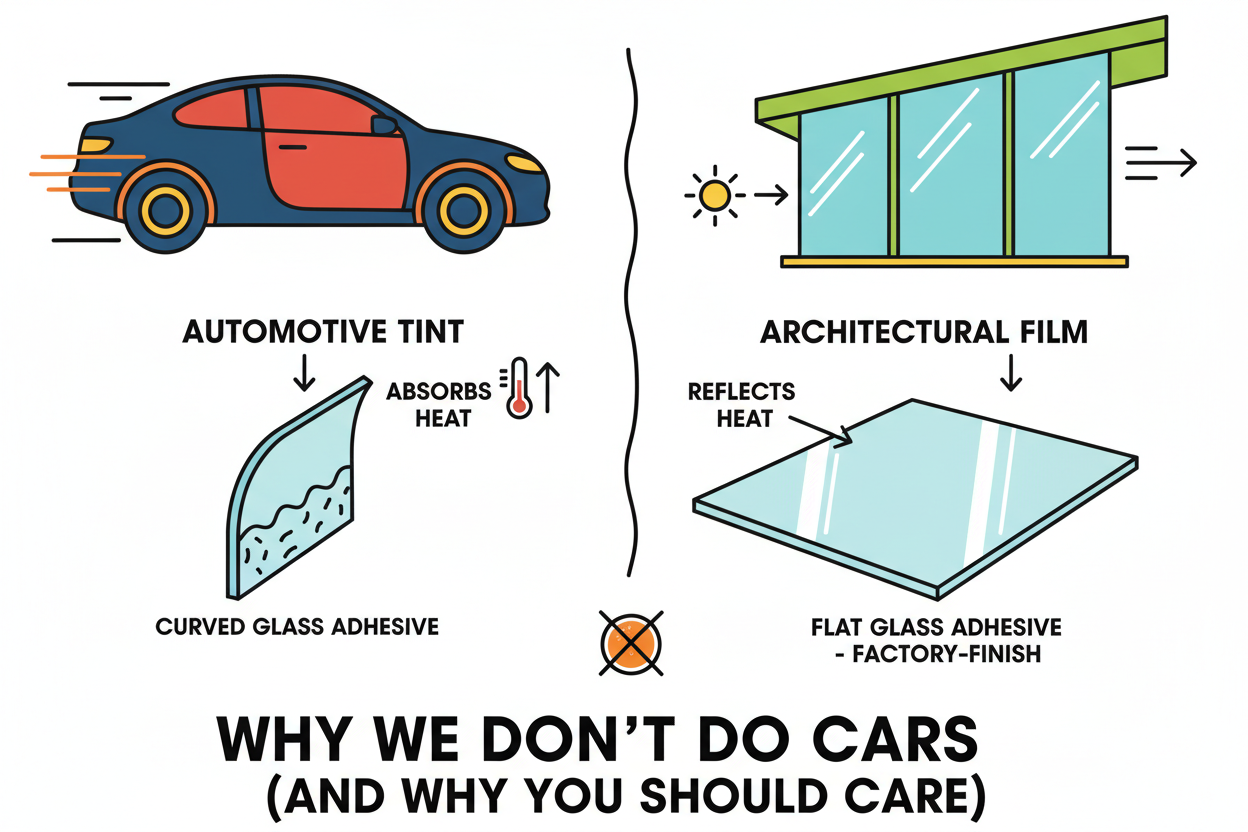
It’s a common question: "If you can tint a window, why not a car?" The answer lies in the chemistry of the film and the physics of the glass.
1. Absorption vs. Reflection
Automotive tint is designed to absorb heat. Because a car is moving, the "wind rush" cools the glass down. If you put that same heat-absorbing film on a static, large-pane window in a south-facing lounge in Buckinghamshire, the heat has nowhere to go. Architectural films are engineered to reflect solar control energy away from the building, keeping the glass cool and the interior comfortable.
2. Adhesive Chemistry
The adhesive on a car film is designed for the curved, tempered glass of a vehicle. Building glass is flatter, larger, and often has different surface treatments. Using the wrong adhesive leads to the "orange peel" effect. As window film specialists UK, we use moisture-activated, optically clear adhesives that bond chemically with the glass, ensuring a "factory-finish" look that lasts decades.
Solar Control: More Than Just a Tinted Window
The primary reason homeowners contact a window tinting company is to reduce the "greenhouse effect." Those beautiful floor-to-ceiling sliding doors that sold you on the house? They’re essentially giant radiators in July.
A professional solar control film can reject up to 80% of solar heat. This means your office or living area stays at a consistent temperature. In an era of rising energy costs, this is a budget-friendly solution that pays for itself. You’ll find your air conditioning or fans aren't working nearly as hard, and you aren't constantly squinting at your TV screen due to glare.
UV Protection: The "Insurance" for Your Furniture
Furthermore, we block 99% of UV rays. UV is the primary cause of fading for hardwood flooring, artwork, and designer furniture. Think of our window films as a permanent SPF 50 for your house. It’s an invisible insurance policy for your interior design.
Finding the Right Window Tinting Company: A Checklist
If you are looking for window tinting installers in the Buckinghamshire area, don't just go for the cheapest quote. Here is what you should be looking for:
-
Architectural Specialisation: Do they have a portfolio of homes, or is their Instagram full of tinted tail lights?
-
Technical Knowledge: Can they explain the difference between Annealed and Toughened glass?
-
Manufacturer Warranties: High-quality architectural films come with 10-15 year residential warranties.
-
Compliance: Do they provide certificates for BS EN 12600 safety standards?
-
Local Presence: A local window tinting company Buckinghamshire knows the specific sunlight challenges of a home in the Chilterns versus a townhouse in London.
The BucksTinting Installation Process
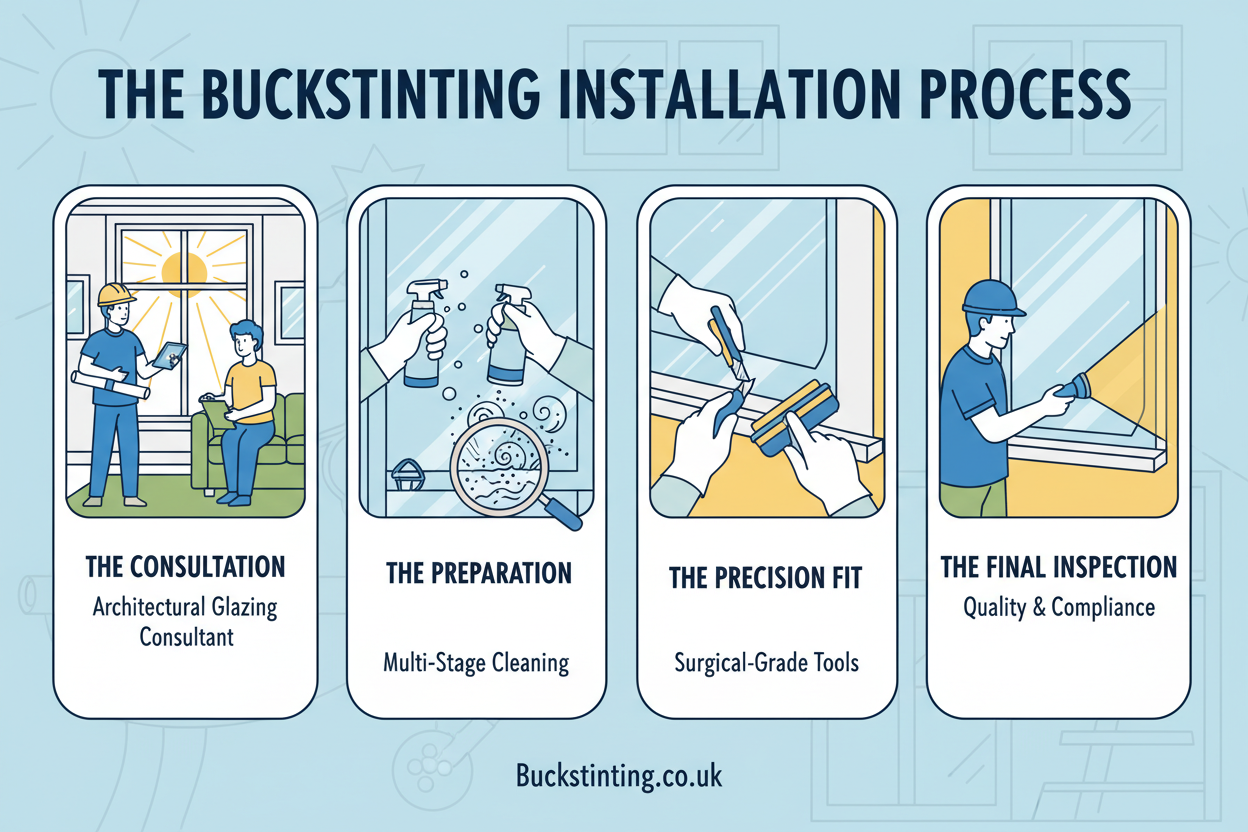
We pride ourselves on a film installation process that is as unobtrusive as possible. We know you don't want a building site in your living room.
-
The Consultation: We act as your Architectural Glazing Consultant, assessing your glass type and sun exposure.
-
The Preparation: We don't just "wipe" the glass. We use a multi-stage mechanical and chemical cleaning process to ensure there isn't a single speck of dust.
-
The Precision Fit: Our installation team uses surgical-grade tools to ensure the film is tucked perfectly behind gaskets. No gaps, no bubbles.
-
The Final Inspection: We check every corner for compliance and quality.
Commercial Window Film vs. Residential Window Film
While our heart is in the home, we also provide commercial window solutions for office buildings across the "Golden Quadrant." The requirements are often different—shifting from privacy film to glare reduction for computer screens—but the level of architectural precision remains the same.
Whether you need to reduce heat in a boardroom in Northampton or add safety film to a school in Guilford, the goal is the same: high-performance results without compromising the view.
The Cost of Expertise: Value Beyond the Price Tag
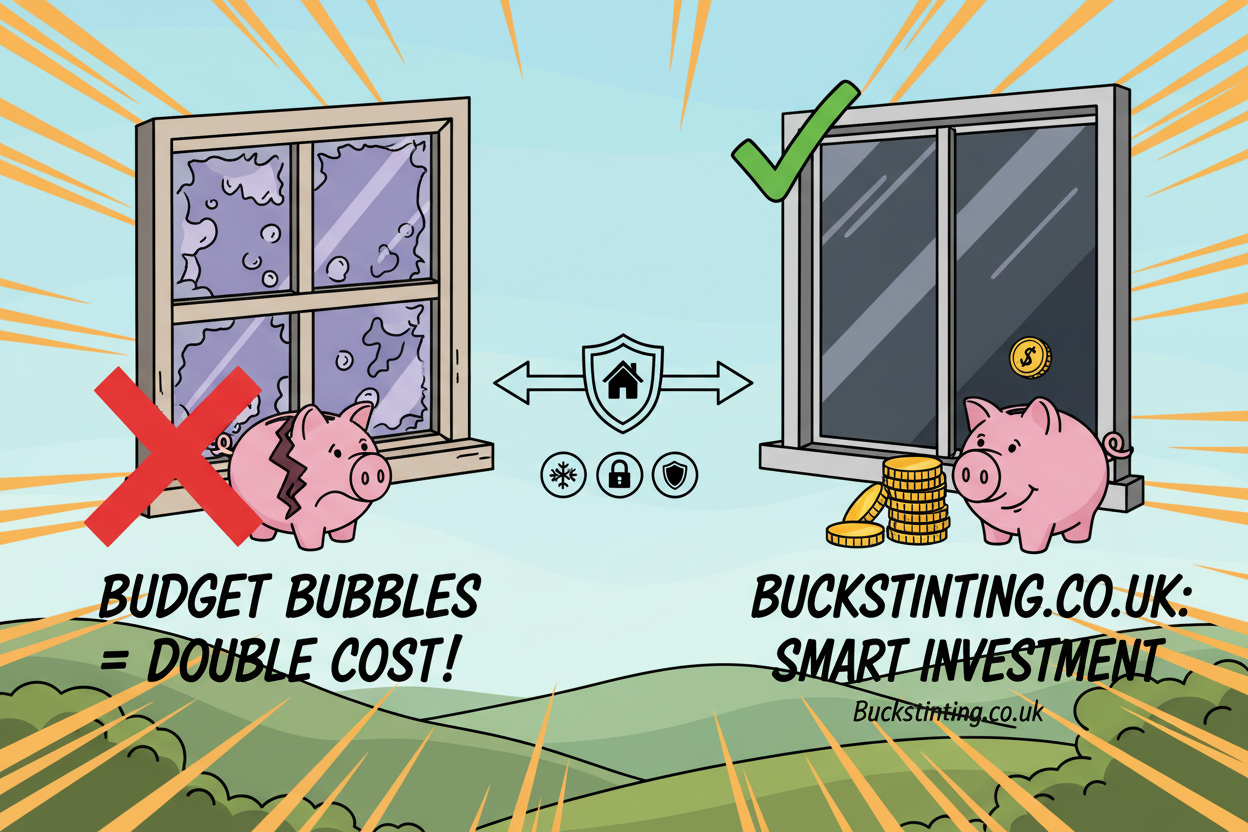
We understand that costs are always a factor. However, a "budget" film installation often ends up being the most expensive option when it has to be removed and replaced two years later because it’s started to peel, bubble, or turn a funky shade of purple.
A professional window tint is an investment in your property's value. It improves energy efficiency, enhances privacy, and provides a layer of safety that standard glass simply doesn't have. It makes your home more "sellable" and significantly more comfortable.
Reclaim Your Home with BucksTinting
You didn’t buy a home with stunning views just to hide behind heavy curtains or clunky blinds all day. You deserve the light without the heat, and the privacy without the "fishbowl" feeling of passers-by peering into your evening.
If you’re looking for a window tinting company that treats your home with the respect it deserves, look no further. From Oxford to London, and everywhere in between, we are the window film specialists UK residents rely on for expert advice and flawless execution.
Stop living in a greenhouse. Contact BucksTinting today for a professional quote and let us help you optimise your home’s glass for a more comfortable, private, and energy-efficient future. We promise no car talk—just expert architectural solutions tailored to your life.