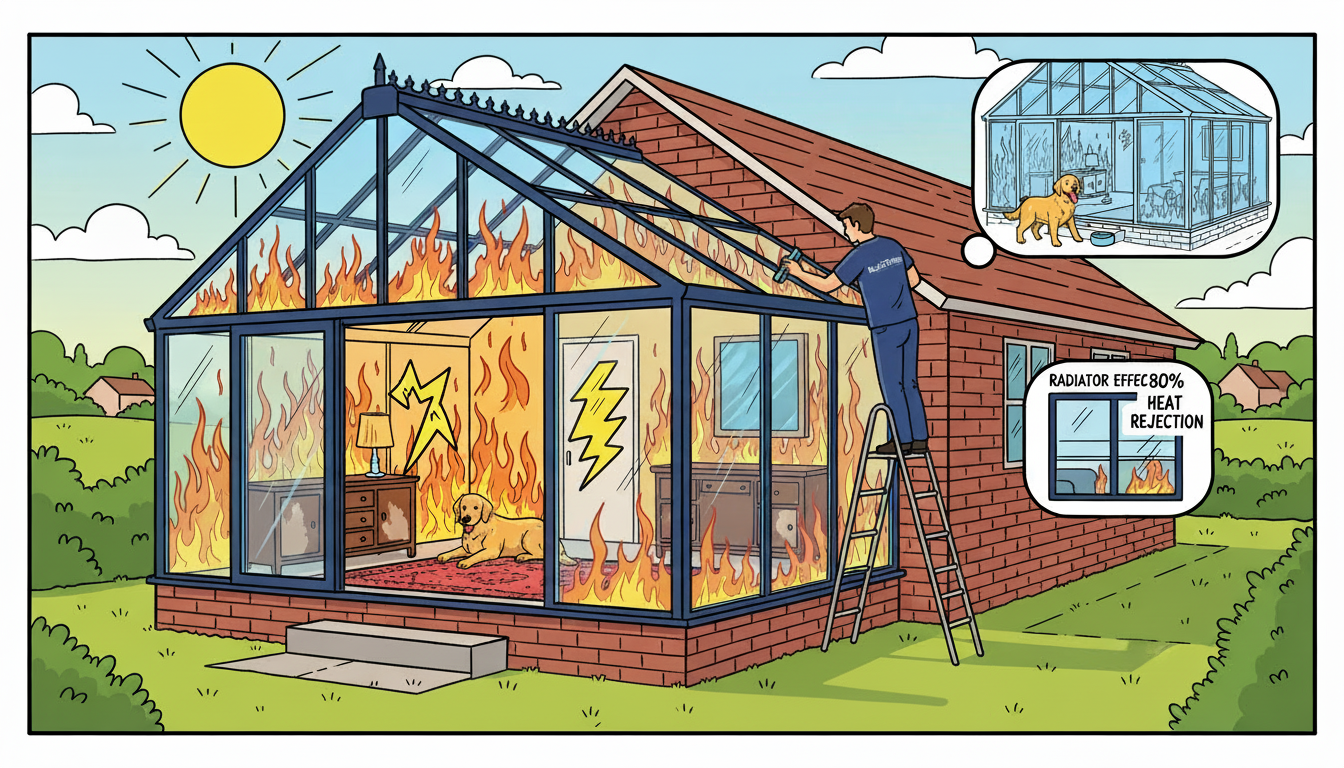
Is there anything more quintessentially British than building a room specifically designed to catch the sun, only to realise that for four months of the year, it’s about as comfortable as sitting inside a pre-heated fan oven?
At BucksTinting, we have seen this scenario hundreds of times across Buckinghamshire. Homeowners invest in a beautiful extension to enjoy their morning tea or host a Sunday lunch, but by June, the space has become what we call the "Glass Box of Doom." This is the classic "Greenhouse Effect" where solar energy enters through the overhead panels but has no way to escape, turning a peaceful retreat into a tropical sauna. If you’re currently using that area as a storage room for "things that can withstand 40-degree heat," it’s time to talk about conservatory roof film.
The Architecture of the Heat Problem
Most extensions in the UK, especially those found in properties from Oxford to London, are designed with maximum glazing to combat our often-gloomy weather. However, when the sun finally decides to show its face, those same transparent surfaces become a liability.
Standard glass or even modern polycarbonate conservatory panels are excellent at letting light in, but they are also incredibly efficient at trapping short-wave infrared radiation. Once that radiation hits the furniture and floor, it converts into long-wave heat. This thermal energy cannot pass back out through the glazing, leading to a rapid temperature spike.
For a south-facing conservatory, the problem is compounded. You aren't just getting a bit of sun; you’re getting a relentless bombardment of solar energy from dawn until dusk. While many think the solution lies in fabric coverings, those often just act as a radiator, trapping the warmth inside the room between the material and the window. It’s like trying to cool down a car by putting a blanket over the dashboard while the windows are closed, you're just hiding the heat, not stopping it.
Why Conservatory Roof Film is the Expert Solution
When we talk about film installation, we’re referring to a high-tech architectural upgrade. Modern solar films aren't just "stickers" for the panes; they are sophisticated multi-layered membranes designed to filter the solar spectrum.
1. Rejecting Heat Before it Enters
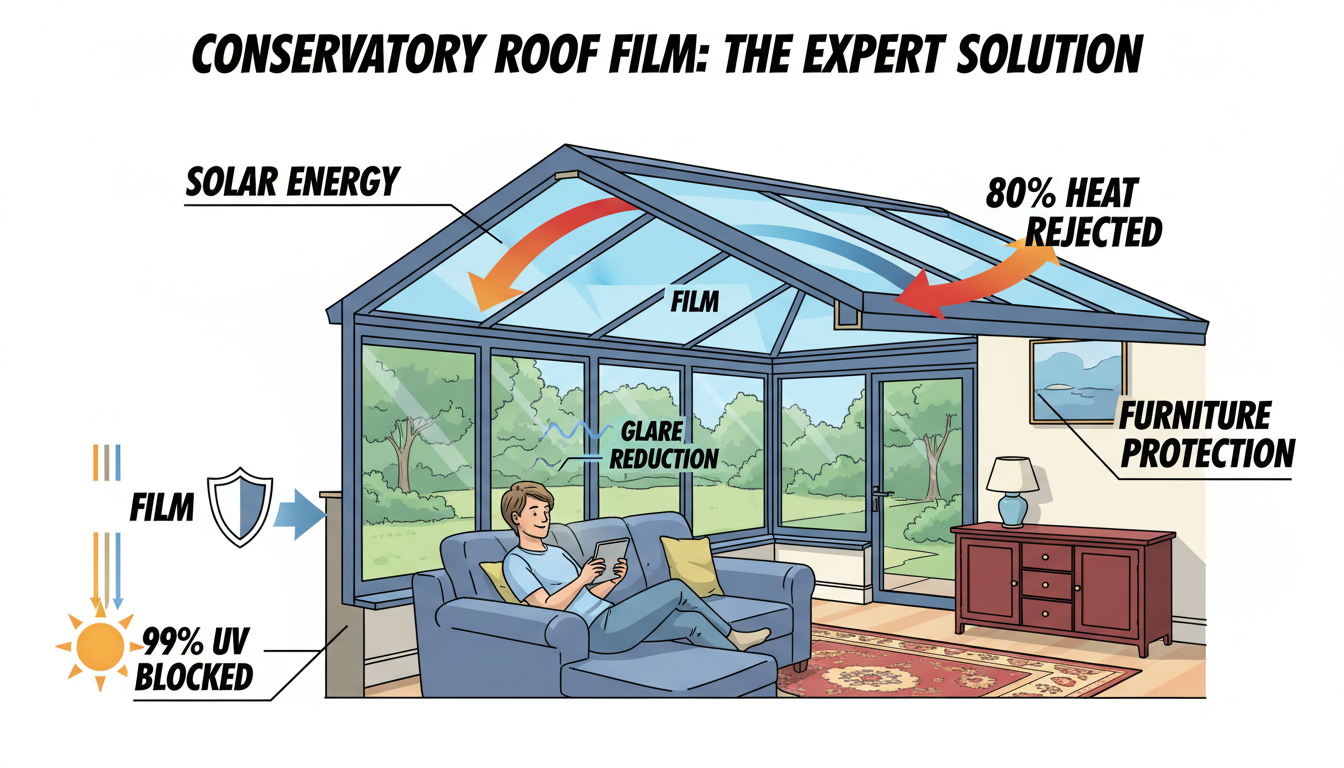
Unlike traditional coverings, which try to manage warmth once it’s already inside the room, window film is applied directly to the internal surface. This allows it to reflect up to 80% of solar energy back outside before it ever passes through the pane. It’s the difference between wearing a wide-brimmed hat in the sun and standing behind a heavy curtain while wearing a woolly jumper. One keeps the wearer cool; the other just masks the discomfort.
2. Managing Dazzle Without the Gloom
We’ve all been there, trying to read a tablet or watch the news in the sunroom, only to be blinded by the visual discomfort of harsh reflections. Many residents resort to heavy curtains, which means sitting in a dark room during a beautiful summer day. Specialist conservatory films are designed to reduce this visual glare by a significant margin while still allowing high levels of natural light to pass through. You keep the view; you lose the squinting.
3. UV Protection for Your Interior
One of the most overlooked benefits of internal films is their ability to block 99% of harmful UV rays. If you’ve noticed expensive rugs or mahogany sideboards starting to look a bit "bleached" on the side facing the light, that’s UV damage. Installing a high-quality film is essentially like putting SPF 50 on the contents of the room.
Glass vs. Polycarbonate: Choosing the Right Product
At BucksTinting, we don't believe in a "one size fits all" approach. The material of the roofing dictates the specific product we must use to ensure long-term durability.
-
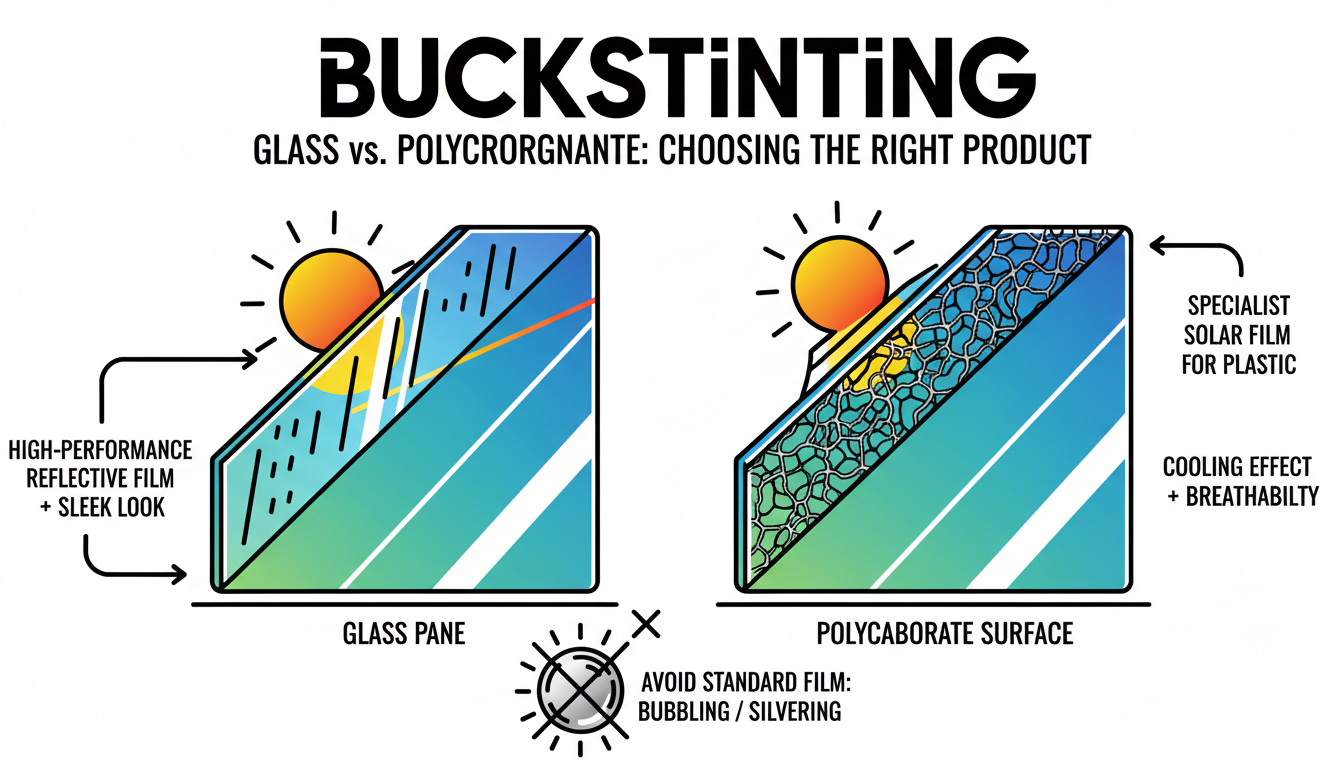
Glass Panes: For standard toughened or laminated overhead surfaces, we typically use high-performance reflective or dual-reflective products. These provide the best heat rejection and a sleek, modern look from the outside.
-
Polycarbonate Surfaces: You cannot use standard window film on polycarbonate. Doing so can cause "outgassing," leading to bubbles and silvering. We use a specialist solar film specifically engineered for plastic substrates. These internal films allow the polycarbonate to breathe while still providing that essential cooling effect.
The BucksTinting Standard: Professional Installation Matters
You might see "DIY" kits online for a few quid, but let’s be honest: applying a large-format film installation to a vaulted roof is a recipe for a weekend of swearing and wasted material. It's the sort of job that looks easy on YouTube until you're six feet up a ladder, covered in soapy water, with a piece of expensive material stuck to your forehead.
When we arrive at a home in Guilford or Northampton, we bring more than just a squeegee. We bring years of experience in handling architectural glass. A professional installation ensures:
-
No Bubbles or Creases: A flawless, "invisible" finish that looks like the glazing was tinted at the factory.
-
Edge-to-Edge Coverage: Vital for ensuring no heat "leaks" through the gaps.
-
Longevity: We use professional-grade solar films that are built to withstand the intense UV exposure of a roof environment without peeling or discolouring.
Efficiency and Year-Round Usability
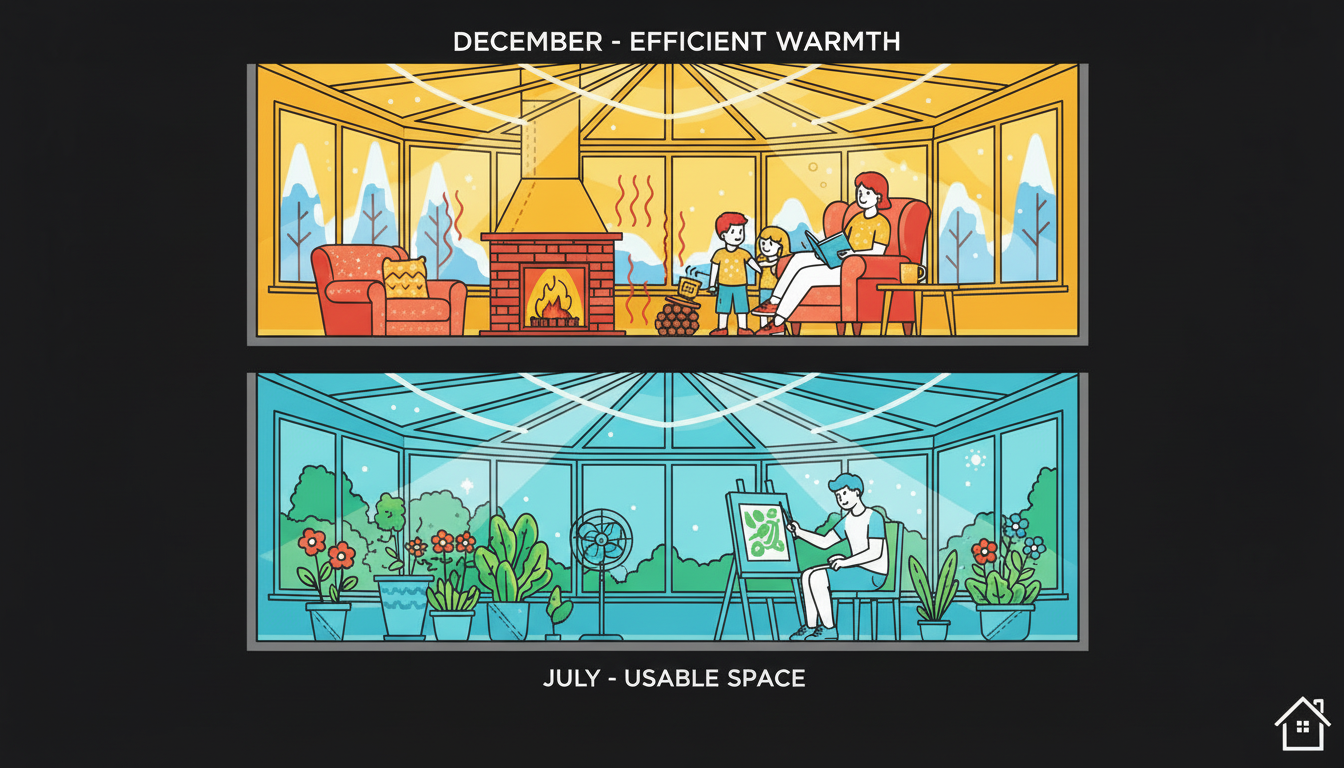
In the winter, a conservatory can be the coldest place in the house. While our primary focus is cooling, certain films low-e (low-emissivity) can actually help retain internal heat during the colder months. By improving the thermal performance of the glazing, you’re not just making the room usable in July; you’re making it more efficient in December.
Think of it as an investment in the home’s square footage. If the sunroom is 15 square metres and you can't use it for four months of the year, that’s a lot of "dead space" you’re still paying for. This specialist roof film effectively "reclaims" that room for year-round living.
Living in Buckinghamshire: Why Local Expertise Matters
We operate across a wide belt of the Home Counties, from the historic streets of Oxford to the bustling suburbs of North London. We understand the local architecture, from Victorian lean-tos in Aylesbury to modern glazing-heavy extensions in High Wycombe.
When you choose a local specialist like BucksTinting, you aren't just getting a service; you're getting an installer who knows exactly how the sun hits a south-facing garden in Beaconsfield at 3:00 PM in August. We’ve probably worked on a property just like yours down the road.
The Science of Solar Control: A Deeper Look
To truly understand how we are solving the Greenhouse Effect in south-facing conservatories, we need to look at the solar spectrum. Sunlight consists of visible light, ultraviolet (UV) light, and infrared (IR) light. While visible light allows us to see, IR light is the primary carrier of heat.
Standard glass allows almost all IR radiation to pass through. Once inside, this energy is absorbed by objects; your sofa, the floor, your poor, over-heating Golden Retriever, and re-radiated as long-wave heat. Because the window is opaque to long-wave radiation, the heat is trapped.
Our solar films use microscopic layers of metal or ceramic to selectively filter these wavelengths. They are engineered to be "spectrally selective," meaning they can block the vast majority of the heat-carrying IR and damaging UV rays while still letting in the visible light you want. This is why you can have a cooler room without it feeling like you're sitting in a cave.
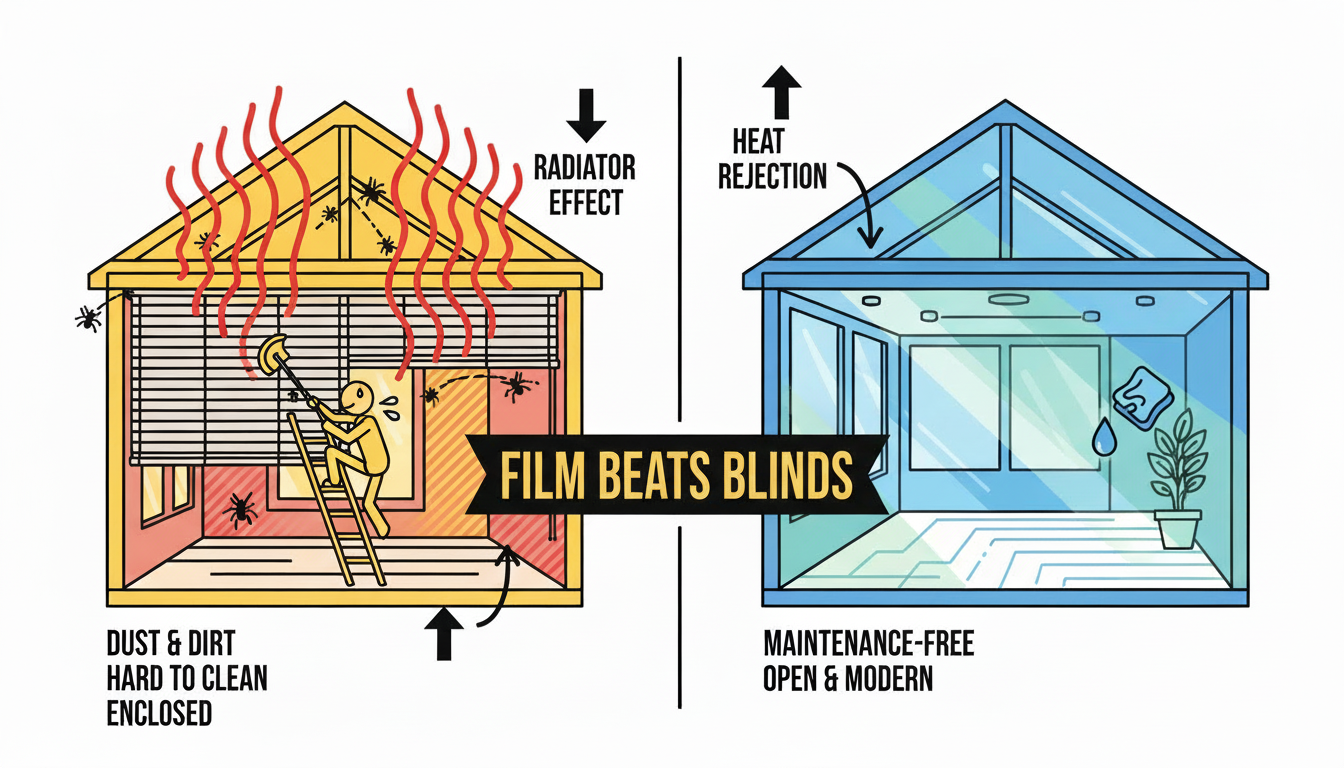
Comparing Solutions: Why Film Beats Blinds
Many homeowners first look at blinds to solve their heat problems. While blinds can offer privacy, they are often disappointing as a cooling solution.
-
The Radiator Effect: As mentioned, blinds stop the light, but they absorb the heat. This heat then radiates from the back of the blind into the room.
-
Maintenance: Blinds in a roof are notorious for collecting dust, dead flies, and spiders. Cleaning them requires a level of gymnastics most of us would rather avoid. Window film, once cured, is virtually maintenance-free and can be cleaned just like normal glazing.
-
Aesthetics: Blinds can make a room feel smaller and more enclosed. Roof film maintains the open, airy feel of your conservatory while providing a clean, modern exterior appearance.
The Installation Process: What to Expect
When you book an installation with BucksTinting, we follow a rigorous process to ensure the best possible result.
-
Preparation: We thoroughly clean the internal surface of the roofing panels. This is the most important step; even a tiny speck of dust can cause a visible blemish.
-
Precision Cutting: We cut the film to the exact dimensions of each pane.
-
Application: Using a specialist solution, we float the material onto the surface, allowing for perfect positioning.
-
Squeegeeing: We use professional tools to remove the solution and any air from behind the membrane, activating the pressure-sensitive adhesive.
-
Finishing: We trim the edges with surgical precision to ensure a perfect fit against the frame.
The result is a transformation that begins the moment we finish the first panel. You can literally feel the temperature drop as we work our way across the roof.
Frequently Asked Questions
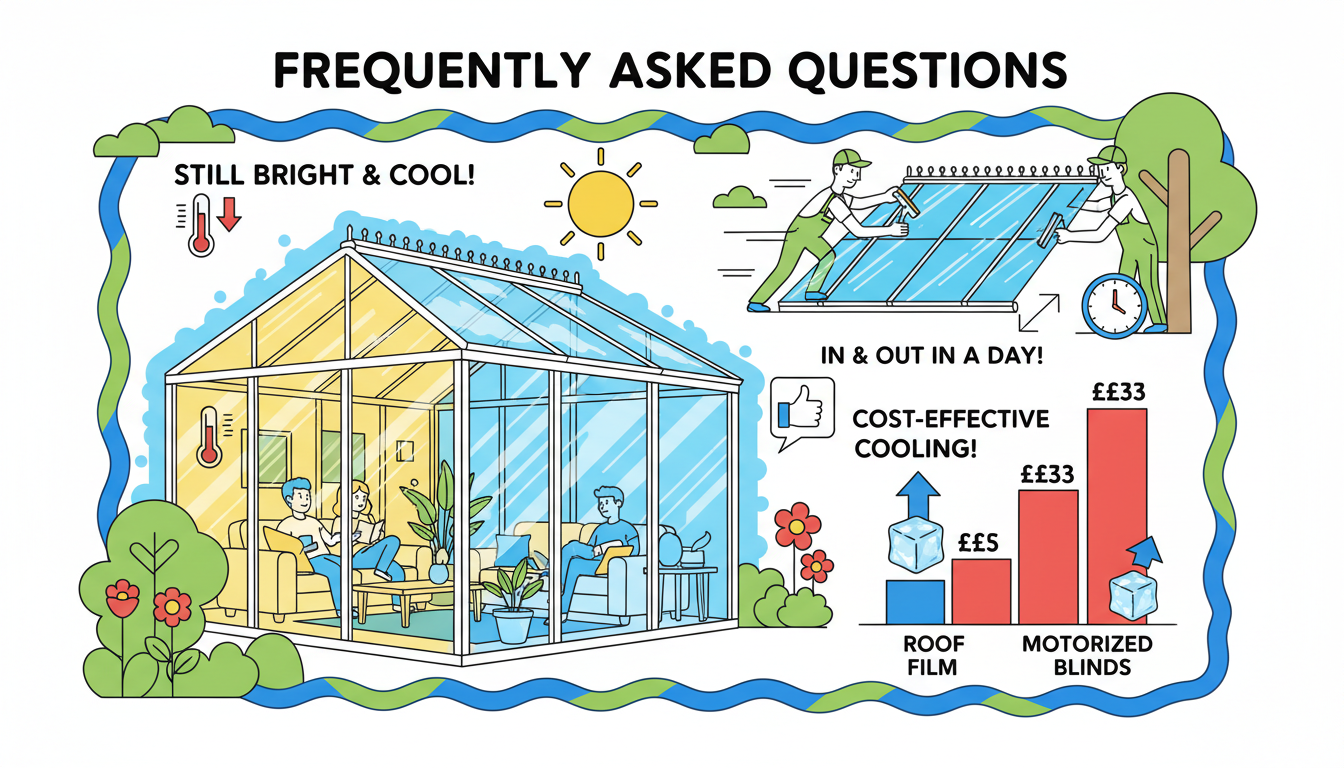
Will the treatment make the room too dark? Not at all. While there are darker tints available if privacy is your main goal, most of our clients opt for products that are virtually indistinguishable from clear glazing once installed. You’ll notice the drop in temperature, but the room will still feel bright and welcoming.
How long does the process take? Most residential projects can be completed within a single day. We work cleanly and efficiently,we won’t leave your house looking like a building site. We’re in, we’re out, and you’re cool.
Is it expensive? Compared to the cost of a tiled roof conversion or high-end motorised coverings, conservatory roof film is remarkably cost-effective. It provides the highest "cooling-per-pound" ratio of any architectural upgrade for these structures.
The BucksTinting Guarantee
We take pride in our work. Whether you’re in Milton Keynes or Marlow, we treat every window as if it were in our own home. Our products come with extensive warranties, ensuring that your heat problems stay solved for years to come.
If you’re tired of your conservatory being a glorified orchid-wilting chamber, let’s fix it. We provide free, no-obligation quotes across our entire service area. We’ll measure the panels, assess your specific needs (whether it’s reducing visual glare or pure heat rejection), and provide a tailored solution that works.
Contact Us Today
Ready to enjoy the extension again? Don't let another heatwave turn the home into a sauna.
BucksTinting serves the following areas:
-
Buckinghamshire: High Wycombe, Aylesbury, Amersham, Beaconsfield.
-
Surrounding Areas: Oxford, London, Northampton, Guilford, and everything in between.
Give us a call or send over a message. We’ll help you turn that "Glass Box" back into the best room in the house.