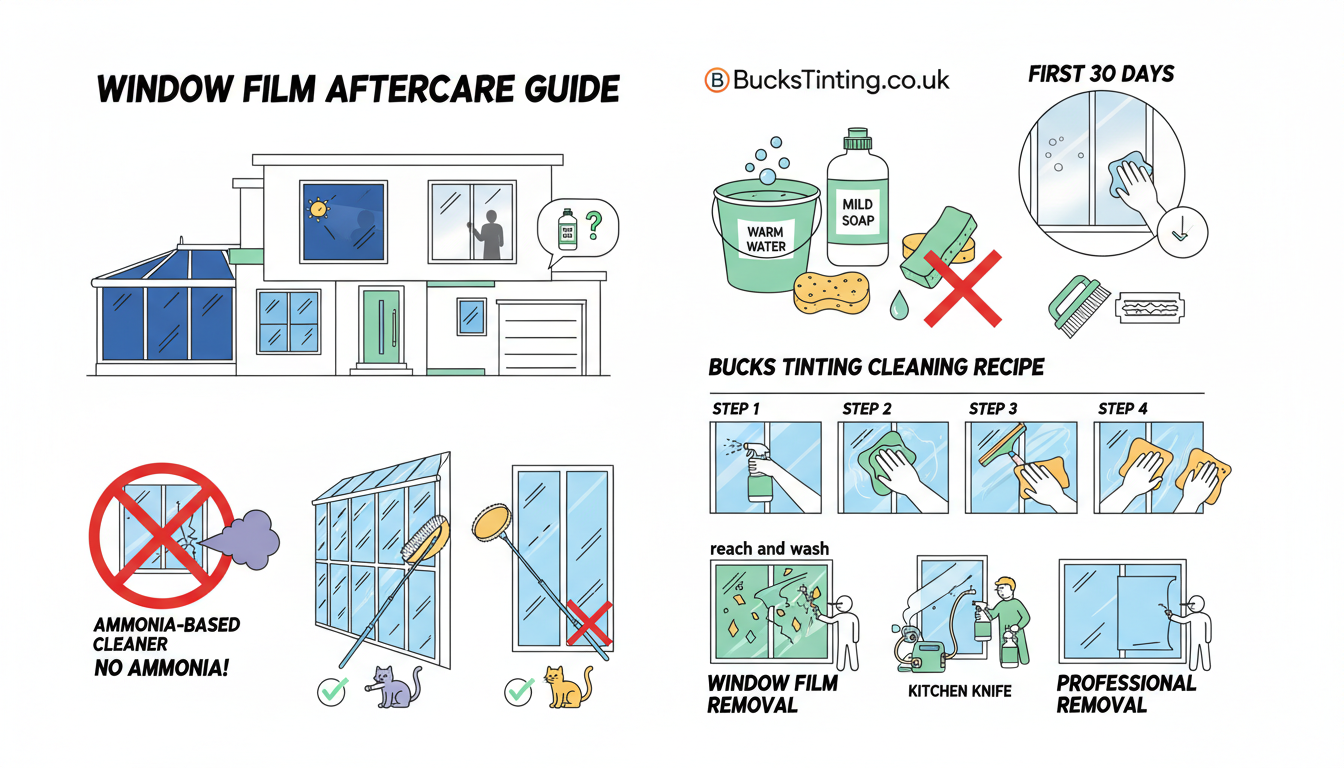
Congratulations! You’ve upgraded your home with a professional film installation. Whether you’ve added a sleek solar control layer to your conservatory window or a high-end privacy window finish to your front door in Oxford, you now have a high-performance surface that’s working 24/7 to protect your interior. But now comes the question we get asked most often at BucksTinting: "How do I actually look after it?"
Treating your window film with a bit of love is the difference between a finish that looks factory-fresh for 15 years and one that starts to look a bit sad after two. While your new residential glazing looks and feels like glass, it requires a slightly different approach than the "bucket and ladder" method your local window cleaner might use. In this guide, we’re going to walk you through the expert steps on how to clean window film without scratching it, why the chemicals in your cupboard might be your film's worst enemy, and what to do when it’s eventually time for a change.
The First 30 Days: The "Wait and See" Period
Immediately after your film installation in Buckinghamshire or London, you might notice a few strange things. You might see some small water bubbles or a slightly "milky" haze. Don't panic—this isn't a faulty product, and no, we didn't leave a small amount of soapy water in there by accident.
Professional window film is applied using a special mounting solution. Because the film is porous on a microscopic level, that moisture needs time to evaporate through the film and the glass. In the UK climate, this "curing" process can take anywhere from 2 to 4 weeks.
Expert Rule #1: Do not clean your windows for at least 30 days post-installation. Touching or cleaning the film while the adhesive is still setting is the fastest way to ruin a perfectly good job. Let it sit, let it cure, and let the magic happen.
How to Clean Window Film Like a Pro
Once that first month has passed, your window is ready for its first cleaning. You don't need a professional-grade kit or expensive chemical cocktails. In fact, the simpler you keep it, the better the protection for the films.
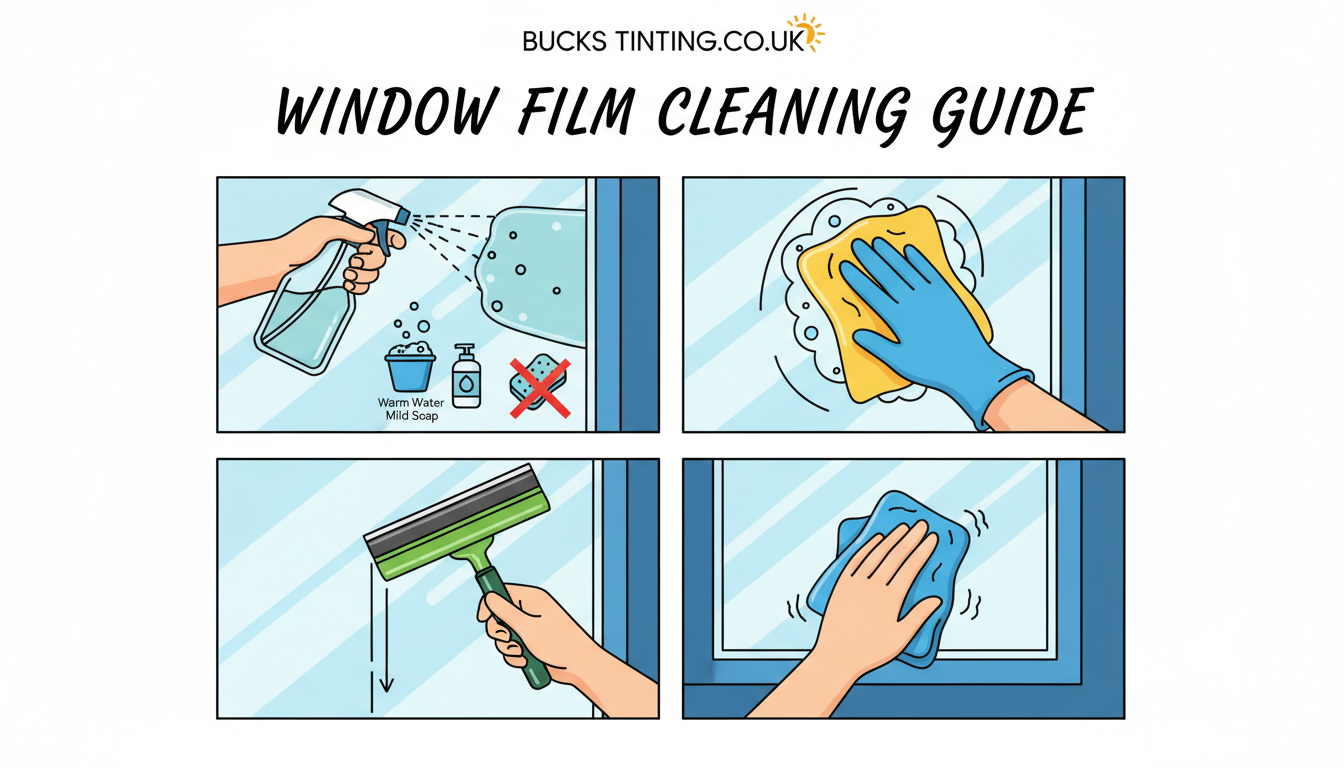
The BucksTinting Cleaning Recipe
Forget the "magic" blue sprays you see at the supermarket. For the best results, we recommend a simple mix you can make in seconds:
-
Warm water: Use fresh water that isn't too hot.
-
Mild soap: A small amount of liquid dish soap added to the water is all you need. Think "gentle" rather than "heavy-duty."
-
The Applicator: Use a soft cloth or a soft sponge. Never use anything with a scouring pad or rough surface.
The Step-by-Step Method
When you are ready to clean the film, follow these steps to ensure you don't leave streaks or—worse—fine scratches:
-
Step 1: Lightly spray your warm water and soap solution onto the film.
-
Step 2: Gently wipe the surface using a microfiber cloth or a sponge. Don't use excessive pressure; the soap will do the hard work for you.
-
Step 3: Use a squeegee with a fresh, clean rubber blade to remove the excess water. Alternatively, you can use a fresh microfiber cloth to dry the surface.
-
Step 4: For the edges, use a dry section of your soft cloth to wick away any remaining moisture.
The #1 Mistake: The Ammonia Warning
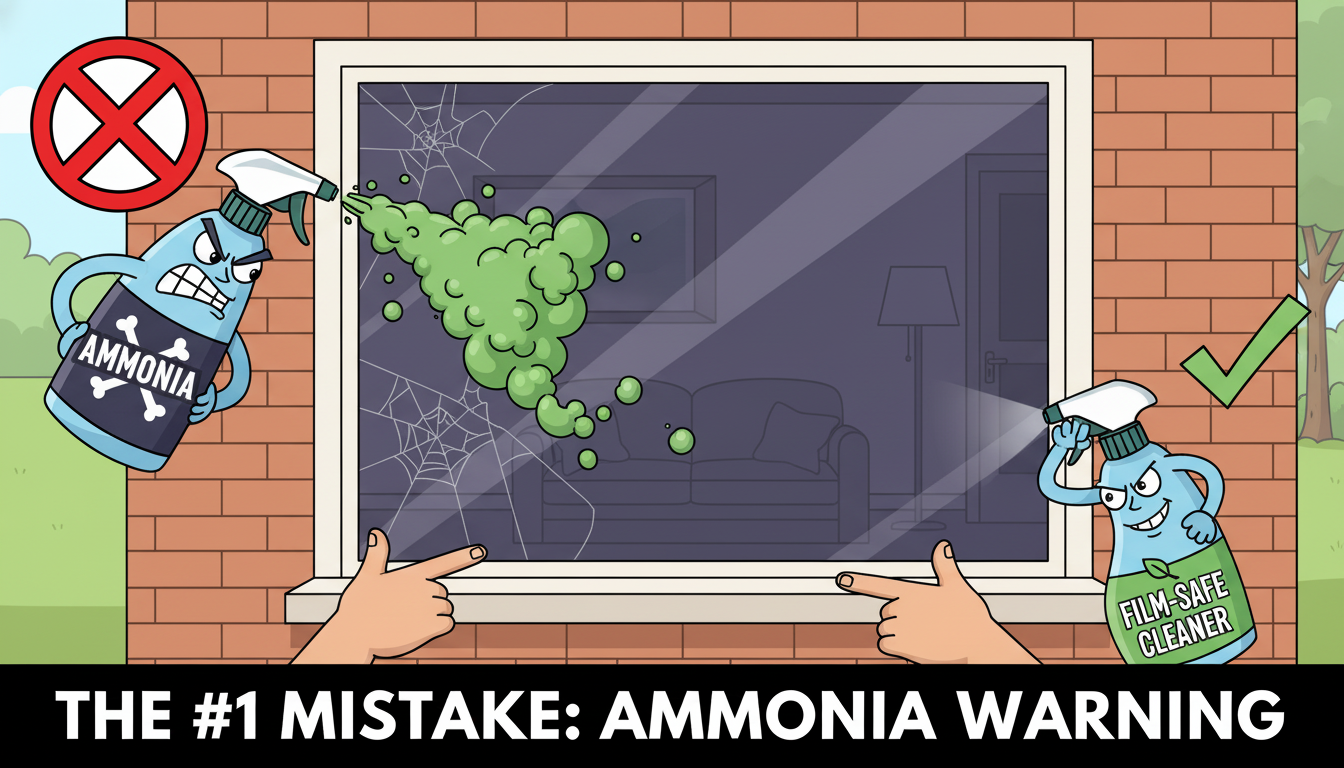
If you take only one thing away from this film aftercare guide, let it be this: Keep ammonia-based cleaners away from your window film. Most common household glass cleaners contain ammonia or other harsh solvents. While these are fine for standard glazing, they are devastating for window tint and films. Ammonia is a chemical "attacker", it eats away at the scratch-resistant coatings and can eventually break down the adhesive that keeps the film bonded to the glass.
Over time, using these cleaners will cause the film to turn brittle, lose its solar control properties, and potentially turn a nasty shade of purple or grey. If you’re hiring a cleaner for your office or home in Northampton or Guildford, make sure you give them a heads-up that you have professional window film installed. A mild, film-safe cleaner is the only way forward.
Dealing with the "Great British Summer" in Your Conservatory
We do a lot of conservatory work across Buckinghamshire. Whether it’s heat rejection or privacy, a conservatory window is a high-exposure area. Because these rooms get so much sunlight, they can collect a lot of dust and pollen.
When cleaning your conservatory, the same rules apply. However, because the glass panels are often larger and harder to reach, the temptation to use a long-reach brush is high. If you use a window cleaning service that uses "reach and wash" poles, ensure they are using a soft sponge head rather than a stiff-bristled brush. Stiff bristles can create micro-scratches that, over time, will dull the solar performance and clarity of your glazing.
Scratch Prevention: The "Do Not Touch" List
Your window film has a tough, scratch-resistant coating, but it isn't indestructible. To maintain the security window or privacy look of your residential property, avoid the following:
-
Brushes and Scrapers: Never use a razor blade or a plastic scraper to remove a sticker or bird droppings from the film. If you have a stubborn bit of dirt, soak it with your soap and water solution until it softens, then gently wipe it away.
-
Jewellery: Be careful of rings when cleaning. A diamond or a sharp metal edge can catch the film and leave a permanent mark.
-
Abrasive Cloths: Even paper towels can be surprisingly abrasive. A high-quality microfiber cloth is your best friend.
Window Film Removal: When It’s Time for a Change
One of the great things about window film is that it isn't permanent—but removing it correctly is a technical installation in reverse. Perhaps you’ve moved into a new home in London and the previous owner had a film reeded or privacy blackout finish that isn't to your taste. Or maybe, after 10-15 years of loyal service, you want to upgrade to a more modern solar control technology.
Why DIY Removal Usually Fails
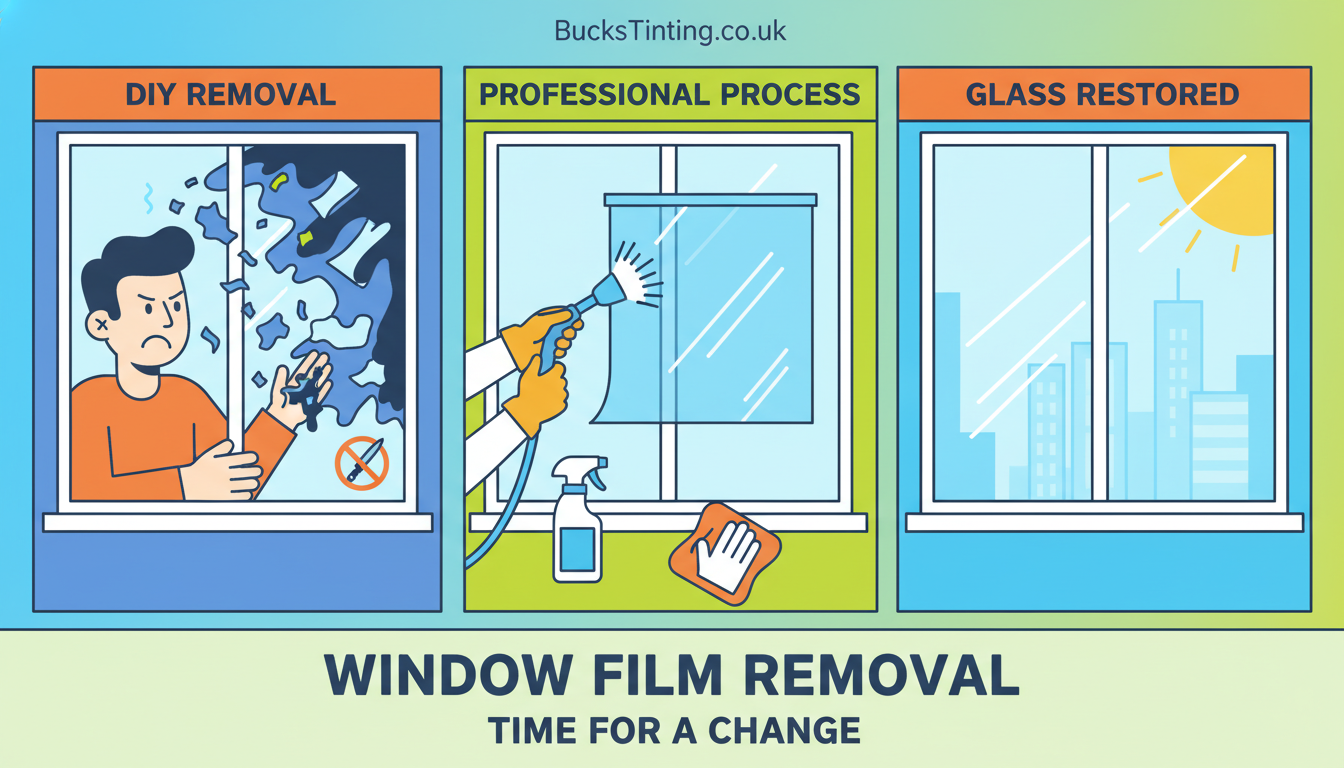
Many people try to peel the film off themselves, only to find it comes off in tiny, frustrating "confetti" pieces. Even worse, the adhesive stays stuck to the glass. This adhesive is designed to be industrial-strength, and if you go at it with a kitchen knife or a harsh solvent, you risk permanently scratching the glass.
The Professional BucksTinting Removal Process
When we handle a window film removal project in Guilford or Northampton, we use a combination of controlled heat and specialised adhesive softeners.
-
Steaming: We often use high-pressure steam to soften the bond, allowing the film to be pulled away in large, clean sheets.
-
Solvent Treatment: Any remaining residue is treated with an industry-specific cleaner that dissolves the glue without damaging the glass or the frames.
-
Restoration: We finish by cleaning the window to a surgical standard, leaving the glass looking exactly as it did before the film was ever applied.
Restoring your glass to its original state is a delicate task. If you’re looking to swap out your old tint for a new safety or solar version, let us handle the removal. It saves you the headache and ensures your residential glazing stays pristine.
Protecting Your Investment Across the Home Counties
At BucksTinting, we pride ourselves on the quality of our projects. From the initial film installation to the long-term film aftercare, we want you to get the absolute most out of your upgrade. Whether you have an office in Northampton, a modern apartment in London, or a beautiful family home in Oxford, following these simple cleaning steps ensures your films continue to control the heat and provide the privacy you deserve.
Summary: The Aftercare Cheat Sheet
If you’re feeling overwhelmed, here is the "too long; didn't read" version of how to clean window film:
-
Wait 30 days after installation before the first wash.
-
NO Ammonia. Check your labels for "Ammonia-Free."
-
Soft Cloths only. Microfiber is king.
-
Mild Soap & Warm Water. No heavy degreasers or chemicals.
-
Professional Removal. Don't risk your glass with a DIY peel.
Need a Hand?
If you have a particularly large conservatory that needs a deep clean, or if you’ve inherited some old, bubbling film that needs a professional window film removal, give us a shout. We operate throughout Buckinghamshire and all surrounding areas, helping homeowners keep their glazing in top-tier condition.
Whether it’s a security window that needs a check-up or a solar control project that’s ready for an update, BucksTinting is here to help. Drop us a message or give us a ring for a residential or office consultation. We’ll bring the expertise, the right soap, and maybe even a half-decent joke about why you should never trust a window cleaner with a razor blade!
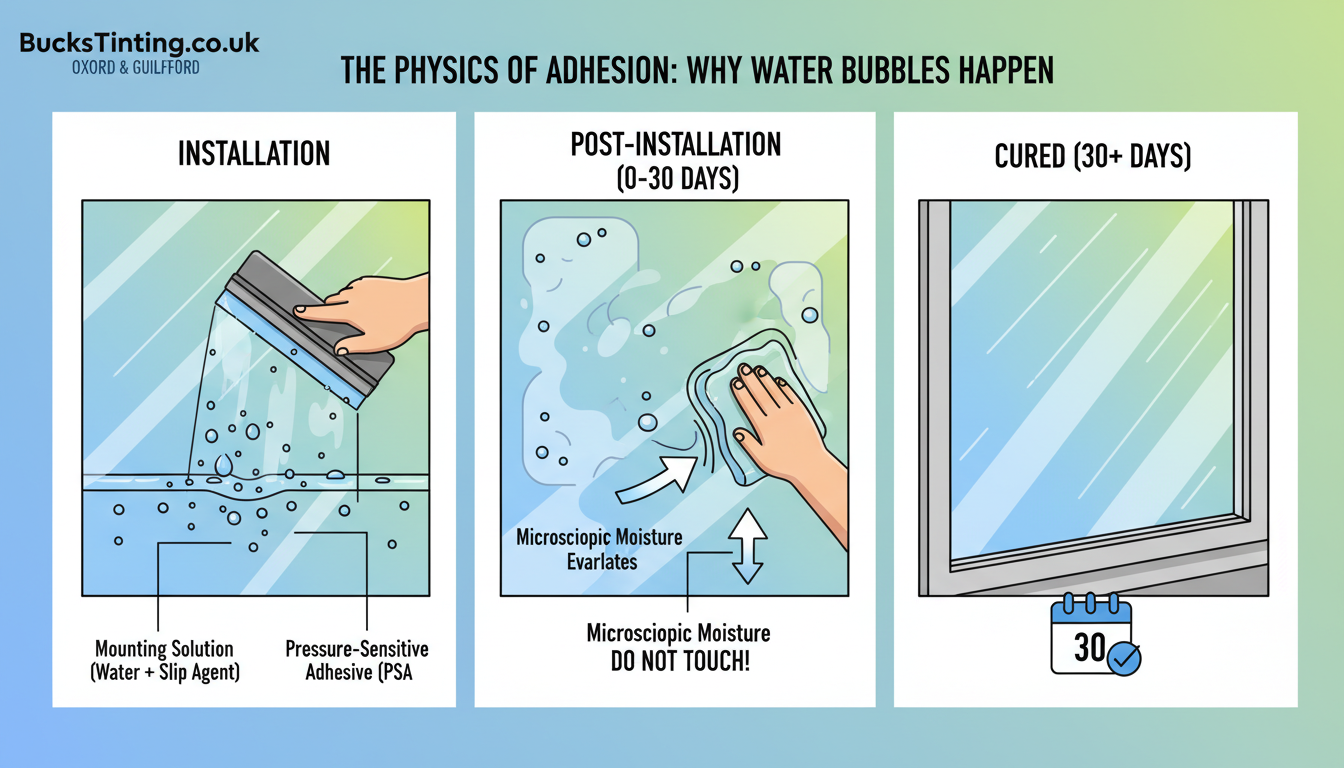
The Physics of Adhesion: Why Water Bubbles Happen
For the technically minded homeowners in Oxford or Guildford, it’s worth understanding why we tell you to wait 30 days. Most residential films use a pressure-sensitive adhesive (PSA). When we install the film, we use a mounting solution (water and a special slip agent) to position it.
The squeegeeing process removes 99% of that moisture, but a microscopic layer remains. This moisture needs to travel through the film’s layers to evaporate. This is why you might see "puddling" or "cloudiness." If you try to clean the window during this phase, the pressure of your hand can move the film on that thin layer of water, creating "fingers" or creases that are impossible to remove once the film dries.
Advanced Troubleshooting: What to Do if You See a Mark
Sometimes, despite your best cleaning, you might notice a streak or a mark.
-
Fingerprints: These are oily. A small amount of extra soap and a microfiber cloth will lift them.
-
Adhesive Residue: If you’ve just removed a "child on board" sticker from the glass (don't worry, we won't tell anyone you had one!), do not use nail polish remover. Use a citrus-based cleaner on a soft cloth, but only on the glass side, not the film side.
-
Dog Nose Prints: We see these a lot on lower conservatory windows. The natural oils from a pet's nose can be stubborn. A mild, film-safe cleaner and a soft sponge are the best way to handle your furry friend’s "artwork."
UK Weather & Your Window Film
The UK weather, from the damp winters in Northampton to the blistering (for us!) summers in London—affects how you clean and maintain your film.
-
Hard Water: In many parts of Buckinghamshire, we have very hard water. When you clean your windows, if you let them air-dry, you might get mineral spots. This is why we emphasise using a squeegee or a soft cloth to dry the film immediately after washing.
-
Condensation: If you have older double glazing, you might see condensation between the panes. Remember: window film is applied to the room-facing side of the glass. It won't fix a blown seal in your double glazing, but it will help with heat and protection once the glazing is repaired.
Frequently Asked Questions (FAQ)
Can I use a pressure washer on my window film? Absolutely not. A pressure washer can catch the edge of the film and tear it away from the glass. Stick to the bucket, sponge, and warm water.
Will my cat scratch the film? While our films have a scratch-resistant coating, a determined cat with sharp claws can leave marks. If your pet is a "scratcher," we recommend a thicker security window film which offers a higher level of durability.
Is there any "wrapping" involved? In the residential world, we don't "wrap" windows like you might see in the automotive world. We precision-trim the film to the edge of the glazing beads. This ensures there are no edges for cleaning cloths to catch on.
Can I use vinegar? While some people swear by vinegar for glass, it’s a bit too acidic for long-term use on film. Stick to the mild soap and fresh water method for the best longevity.
What if my window cleaner uses a ladder? Make sure they are careful not to lean the top of the ladder directly against the film on the outside of the window (if you have an external film installation). For internal films, the biggest risk is the cleaner’s tool belt catching the glass as they work.
The BucksTinting Promise
We believe that a professional installation is just the beginning. By following this guide on how to clean window film, you’re ensuring that your investment in privacy, safety, and solar control continues to pay off for years to come.
Should you ever have a concern about a mark or a change in your film's appearance, we are just a phone call away. We’ve served Buckinghamshire and the surrounding areas for years, and our reputation is built on the aftercare we provide. Keep it clean, keep it safe, and enjoy the protection of your upgraded home.