
Let’s be honest: glass is beautiful, but it’s a thermal nightmare. If you run a business in Buckinghamshire, you already know the drill. In July, your office feels like a greenhouse, and by January, you’re basically paying to heat the pavement outside because your windows have the insulation of a wet paper bag.
In the current UK commercial landscape, true energy efficiency has evolved from a "nice-to-have" into a high-priority financial necessity. Between volatile utility costs and the tightening of MEES (Minimum Energy Efficiency Standards), business owners are looking for ways to stop the bleed.
The most vulnerable element of any modern building envelope is undoubtedly the glass. Untreated windows are responsible for up to 40% of a building's heat loss in winter and a staggering 87% of solar heat gain in summer. This guide is your roadmap to office glass optimization—showing you how professional energy saving window film acts as a high-performance thermal barrier without the massive price tag of new glazing.
Chapter 1: The Science of Thermal Regulation (Without the Boredom)
How Does Energy Saving Window Film Work?
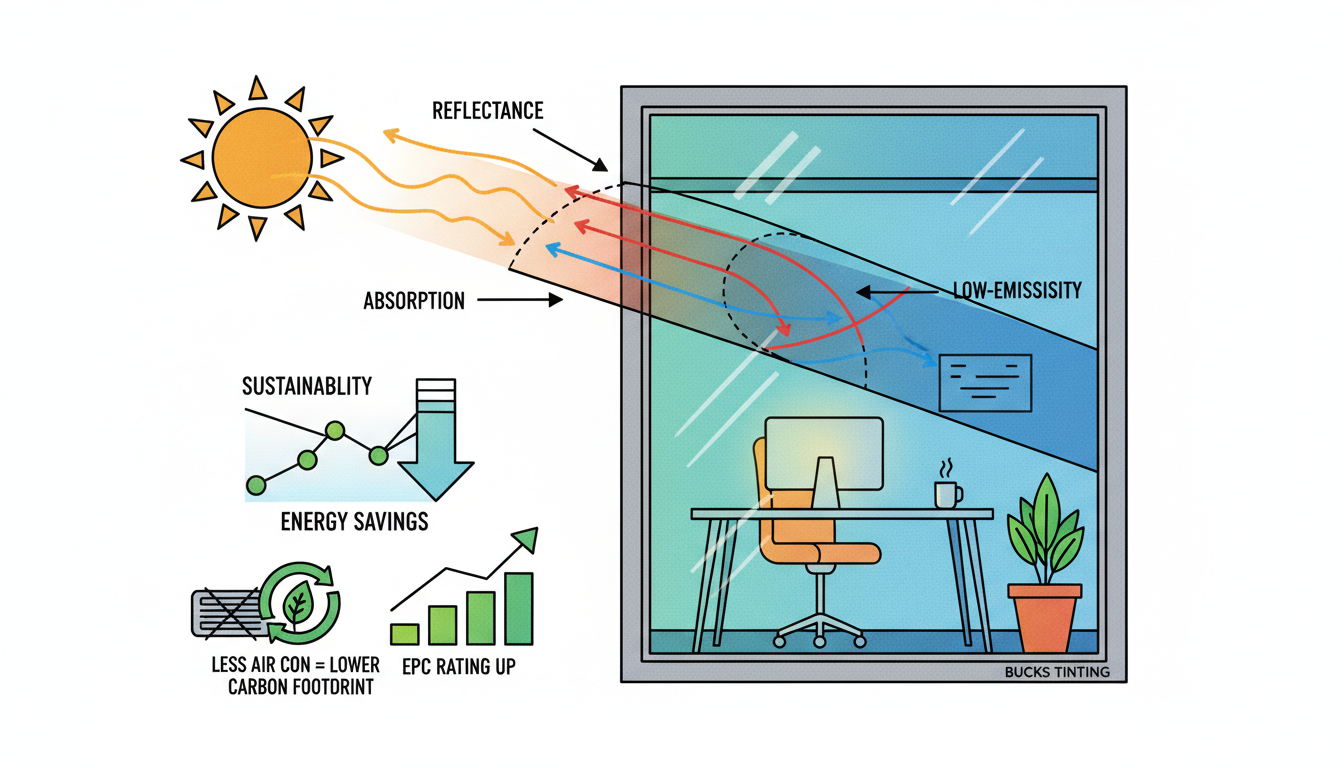
To understand the value of energy saving window film, we need to look at how it handles the sun. Think of professional-grade architectural film as a multi-layered precision instrument. It’s not just a "sticker." It’s designed for high-level heat rejection. By rejecting solar energy before it even enters your workspace, the film stops that "greenhouse effect" that makes glass-heavy offices feel like an oven.
When our team at BucksTinting installs these solar control solutions, the film performs three main tricks:
-
Reflectance: Using solar reflective coatings to bounce the majority of solar energy away from the window.
-
Absorption: The window film absorbs some heat, which the glass then naturally bleeds back outside.
-
Low-Emissivity (Low-E): This is the winter hero. Advanced energy saving window films reflect heat back into the room during the winter, keeping you cozy while the heating bill stays low.
Solar Control and Heat Control Fundamentals
Maintaining a decent workplace climate requires consistent heat control. In the summer, untreated glass lets in short-wave infrared radiation. Once that solar energy hits your desk, your carpet, or your coffee mug, it turns into long-wave heat that can’t get out.
By installing a solar control window film, you are effectively rejecting a massive portion of that incoming heat. It’s like giving your HVAC system a well-deserved holiday, leading to significant energy savings. This isn't just about a solar film; it's about building a smarter building envelope.
Chapter 2: Achieving Real Energy Efficiency and Sustainability
The Role of Efficient Window Systems in Modern Offices
For UK landlords, energy efficiency isn't just about being green anymore—it's the law. Properties need higher EPC ratings to stay on the market. Energy-saving window technology is one of the fastest, least disruptive ways to jump an EPC band. If you're looking for an efficient window solution that doesn't involve replacing the frame, a reduction film or a specific control film is your best friend.
-
Office Glass Optimization: Cutting down on winter heat loss is the quickest way to stabilize your building's temperature.
-
Carbon Footprint: Less air con means lower energy consumption. Simple as that.
-
Increase Insulation: Low‑E films significantly improve single glazing’s thermal performance. When you increase insulation at the glass level, the whole energy efficiency profile of the building changes.
Chapter 3: Technical Specs—The "Installer's Secret" to G-Values
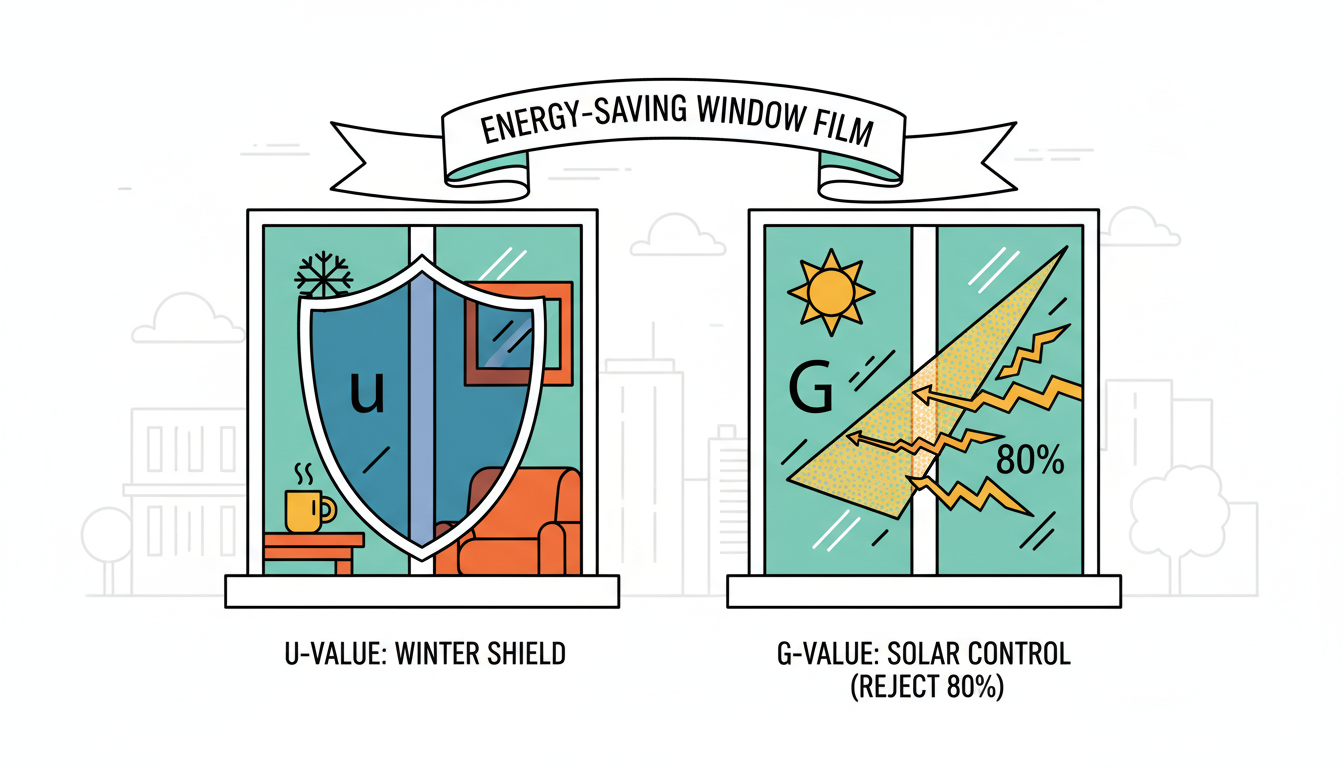
When we talk about energy saving window film, we usually look at two numbers: the U-Value (how much heat escapes) and the G-Value (how much heat gets in).
The U-Value: Your Winter Shield
A lower U-Value means better insulation. Standard glass is terrible at this. But by applying a high-performance insulating window film, you can trap the heat inside the room. You’ll notice the difference the next time there’s a frost in Aylesbury—you won’t feel that "cold draft" every time you sit near the window. A professional window film glass installation ensures that the film energy properties are working year-round.
The G-Value: Mastering Solar Control
In a standard window, the G-Value is often around 0.87. That means 87% of the sun's heat is coming right through.
-
Solar Reflective Coatings: These drop that G-Value down to 0.20.
-
Energy-Saving Window Benefits: By rejecting 80% of solar energy, you keep the staff happy and the AC off.
Chapter 4: Privacy, Productivity, and Retail Clarity
Why "Reduction Film" is a Workplace Essential
Glare is the silent productivity killer. If your staff are constantly squinting at screens or closing the blinds (and turning the lights on—which wastes more energy!), you have a problem. Solar window films provide privacy and solar control while still letting the natural light in.
Modern window films allow for high light transmission while blocking the "dazzle." This means you don't have to live in a dark cave to be comfortable.
The Benefits of Transparent UV Window Film
For retail shops in Marlow or High Wycombe, you don't want a "tinted" look—you want people to see your stock. Transparent UV window film provides the protection you need for your fabrics and furniture without changing the view. It’s invisible security. This control film is essentially a reduction film for the UV spectrum, which is the leading cause of fading.
Chapter 5: The "Office Greenhouse" Reality Check
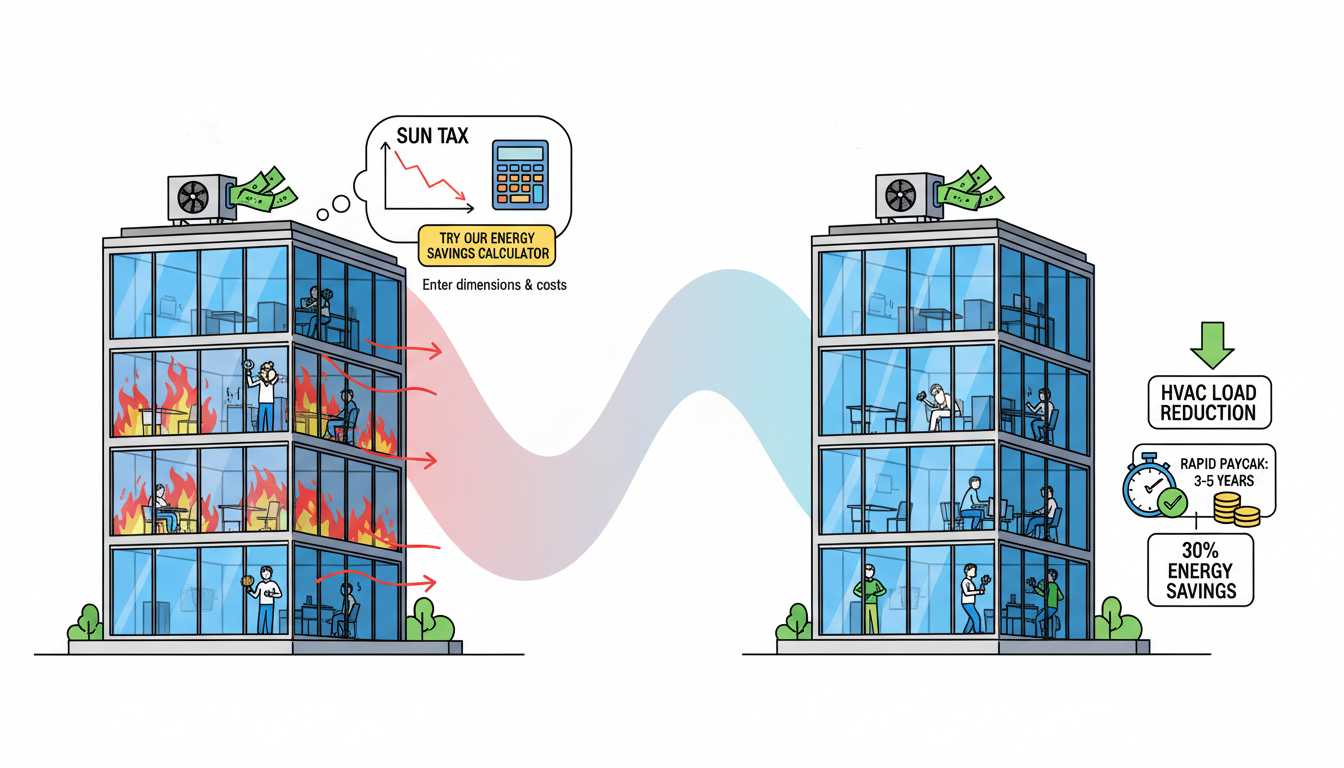
It’s one thing to read about solar energy, but it’s another to see it on your balance sheet. Most business owners don’t realise that their HVAC system is essentially a "sun tax"—you are paying every month just to fight the heat coming through your own windows.
If you’re tired of guessing how much your glass is costing you, it’s time to stop the guesswork. We’ve designed a tool specifically for Buckinghamshire business owners to see the impact of professional film in real-time.
Chapter 6: The Commercial ROI (Show Me the Money)
Achieve Energy Cost Savings through HVAC Reduction
Running air conditioning is like pouring money into a fan. Using solar control window film is a "passive" cooling strategy. It doesn't need electricity; it just sits there being useful.
-
HVAC Load Reduction: Many of our commercial clients see energy consumption drop by up to 30%.
-
Less Wear and Tear: Your HVAC system won't have to work 24/7 just to keep up, meaning it lasts longer and breaks down less.
-
Rapid Payback: Most commercial film projects pay for themselves in 3 to 5 years. In the world of building retrofits, that’s a sprint, not a marathon. When you factor in the energy saving window film cost vs. a full glazing replacement, the film wins every time.
Chapter 7: The Professional Installation Roadmap
At BucksTinting, we’ve seen enough "DIY disasters" to know that the secret is in the prep. Here is how we handle a professional office glass optimization project:
-
The Glass Audit: Not all films work on all glasses. We check your glazing type to prevent thermal stress (cracked glass is never a good look).
-
The Deep Clean: We clean the glass and frames until they’re cleaner than a surgeon’s prep table. Any speck of dust becomes a permanent bubble.
-
The Precision Fit: We apply the control film with specialized solutions and tools to ensure a seamless, edge-to-edge finish.
-
The Invisible Cure: The film takes a few days to fully "cure" and bond, at which point it becomes a permanent part of your building’s defense.
Chapter 8: Common Myths About Window Film
One of the reasons people hesitate to install window film is because they are picturing the bubbled, purple tint on a 1998 boy-racer's car. Professional architectural film is a completely different species.
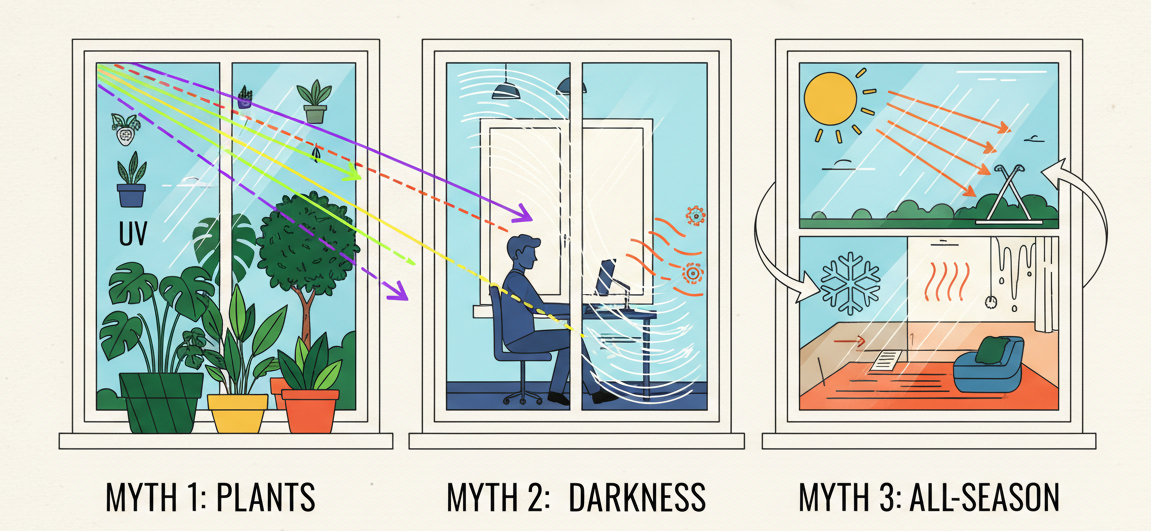
Myth 1: "It Will Kill My Plants"
Actually, most office plants love window film. While it blocks the UV rays that can burn leaves, it still allows the visible light through that plants need for photosynthesis. In fact, by stabilizing the temperature in the room, your plants are less likely to suffer from thermal shock.
Myth 2: "It Will Make the Office Too Dark"
Not at all. We have window films that are virtually transparent. These films are engineered to block the heat (infrared) and the damage (UV) while letting the light (visible) through. You can keep your rooms cooler without needing the lights on at midday.
Myth 3: "It’s Only for Summer"
As we discussed with the U-Value, the right energy saving window film works in the winter to reflect heat back into the building. It’s an all-season energy saving solution.
Chapter 9: The Impact of Window Film on UK Building Legislation
The UK government is serious about reaching Net Zero, and that means buildings are under the spotlight. For many local businesses in Buckinghamshire, the MEES regulations are a looming deadline. If your building's EPC rating is too low, you simply won't be able to lease it out.
Office Glass Optimization as a Compliance Strategy
Replacing all the windows in a 1980s office block is a logistical nightmare. It involves scaffolding, noise, and massive capital expenditure. Window film, however, can be installed over a weekend. It's the most "bang-for-your-buck" way to achieve energy cost savings and satisfy the legal requirements for energy efficiency.
When you combine solar control window film with other measures like LED lighting, you create a building that is not only cheaper to run but also more valuable on the open market.
Why BucksTinting?
We know the local architecture. From the historic storefronts in Marlow to the modern office parks in High Wycombe, we understand how the sun hits the glass in this part of the world. A local architectural window film installer doesn't just stick film to a window; they consult on the right film for the right orientation.
-
South-Facing Windows: Require high heat control and maximum solar energy rejection.
-
North-Facing Windows: Might focus more on the insulating window film properties to reduce winter heat loss.
Chapter 10: Frequent Questions (FAQs)
How long does window film last?
- A professional installation should last between 10 and 15 years. The window films we use are ruggedized with a scratch-resistant coating, so as long as you clean them properly, they stay looking perfect.
Can I clean my windows as normal?
- Yes, but with one caveat: no abrasive scrubbers. A squeegee and a mild soap-and-water solution are all you need. You'll find that window film glass is actually quite easy to keep clean because the film surface is very smooth.
Does it offer privacy?
- Many window films provide a "one-way mirror" effect. This gives you excellent daytime privacy—you can see out, but passers-by can’t see in. It’s a great way to hide expensive office equipment from prying eyes without needing to pull the blinds.
Is there a warranty?
- Every energy saving window project we do comes with a manufacturer-backed warranty. We stand by the efficient performance of our films.
Will it crack my glass?
- Only if the wrong film is applied to the wrong glass. This is why the "Glass Audit" in our roadmap is so important. We calculate the thermal stress to ensure the solar control window film is perfectly compatible with your glazing.
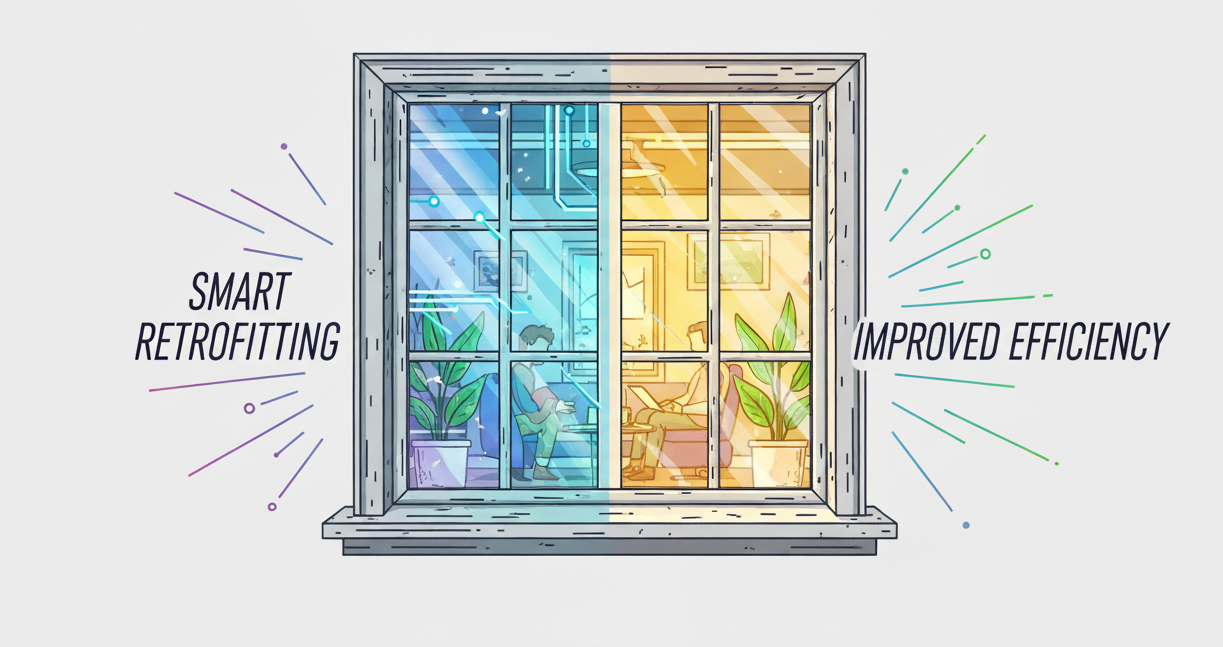
Chapter 11: The Future of Glazing—Smart Retrofitting
The "greenest" building is the one that is already built. Demolishing old buildings or ripping out perfectly good frames just to improve energy efficiency is an environmental disaster. The future of the UK building industry is in retrofitting.
By choosing energy saving window film, you are participating in the circular economy. You are taking a 20-year-old window and giving it the performance of a 2026 efficient window. You are rejecting the "disposable" culture of modern construction and opting for a smart, long-term solution.
Conclusion: Making Your Glass Work for You
Whether you want to reduce energy costs, gain a bit of privacy, or just stop your office from feeling like the inside of a baked potato, energy saving window film is the smartest move you can make for your building.
At BucksTinting, we don't just "tint windows"—we solve thermal problems. We know the local architecture, we know the UK weather, and we know how to make your windows perform. It's time to stop the sun from dictating your comfort.