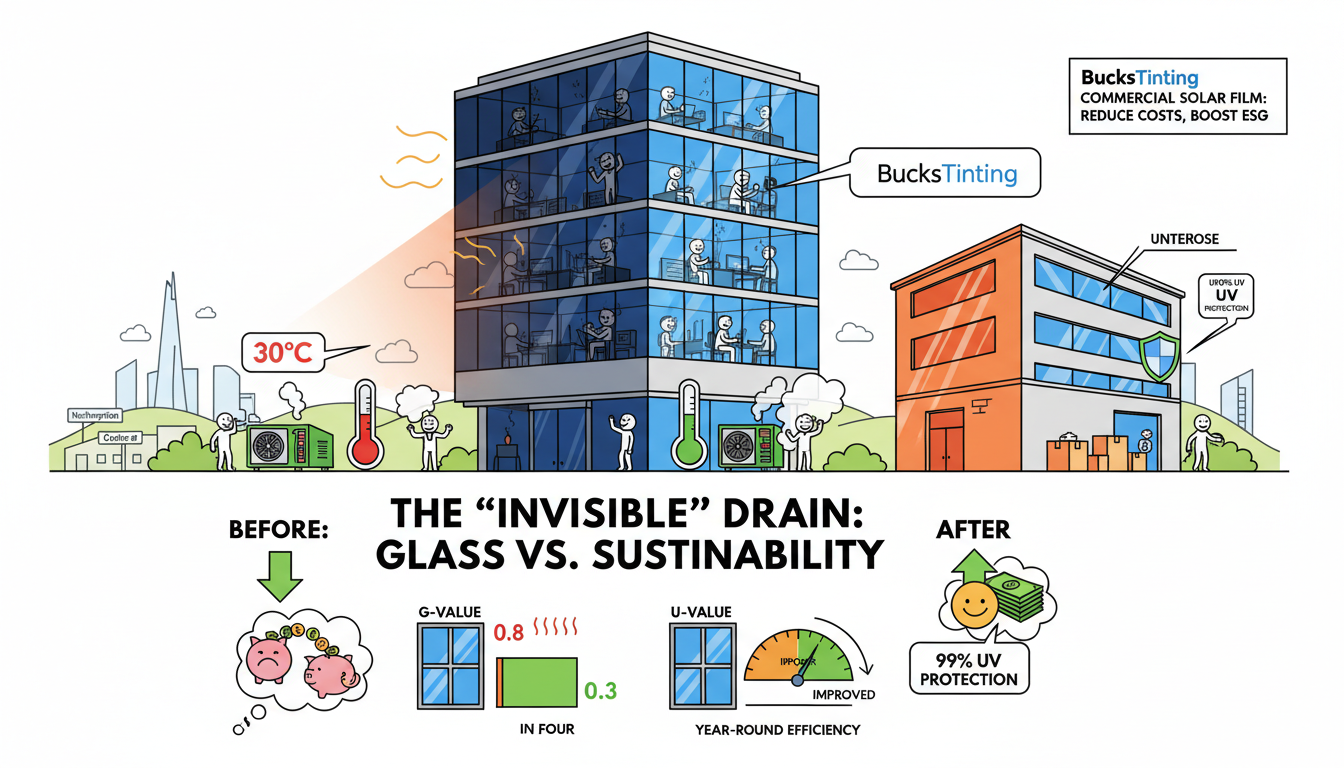
In the current economic landscape, UK businesses are facing a double-edged sword: the urgent pressure to meet ESG (Environmental, Social, and Governance) targets and the relentless climb of operational overheads. For many industrial estates in Northampton or office blocks in West London, the "invisible" drain on the balance sheet isn't just the rising cost of electricity, it’s the thermal inefficiency of the glass itself. At BucksTinting, we don’t just see a window; we see a thermal gateway that is either supporting your sustainability goals or actively sabotaging them.
Commercial solar film has transitioned from being an aesthetic extra to a critical component of industrial facility management. Whether you are managing a high-tech hub in Oxford or looking for warehouse window tinting in Buckinghamshire, the goal is simple: reduce solar heat gain and stop paying to cool air that shouldn’t have been hot in the first place.
The "Green" Building Dilemma: Glass vs. Sustainability
Modern British buildings are architectural marvels, but they are often thermal nightmares. Large glass facades are fantastic for maximizing daylight hours and boosting employee well-being, but without the right solar control, they effectively become massive radiators. In a large-scale office or industrial unit, the HVAC system has to work overtime to combat the greenhouse effect, leading to a bloated carbon footprint and skyrocketing energy bills.
By investing in a professional film installation, you are essentially putting a high-performance filter on your building. This isn't just about making the office more comfortable for the team (though they’ll certainly thank you for it); it’s about the measurable amount of energy you save. Studies show that commercial window film can reduce cooling costs by an average of 15%, providing a Return on Investment (ROI) in as little as two years. For every 100 square feet of film we install, you can reduce your carbon emissions by nearly a ton annually.
Warehouse Window Tinting: Protecting Assets, Staff, and Stock
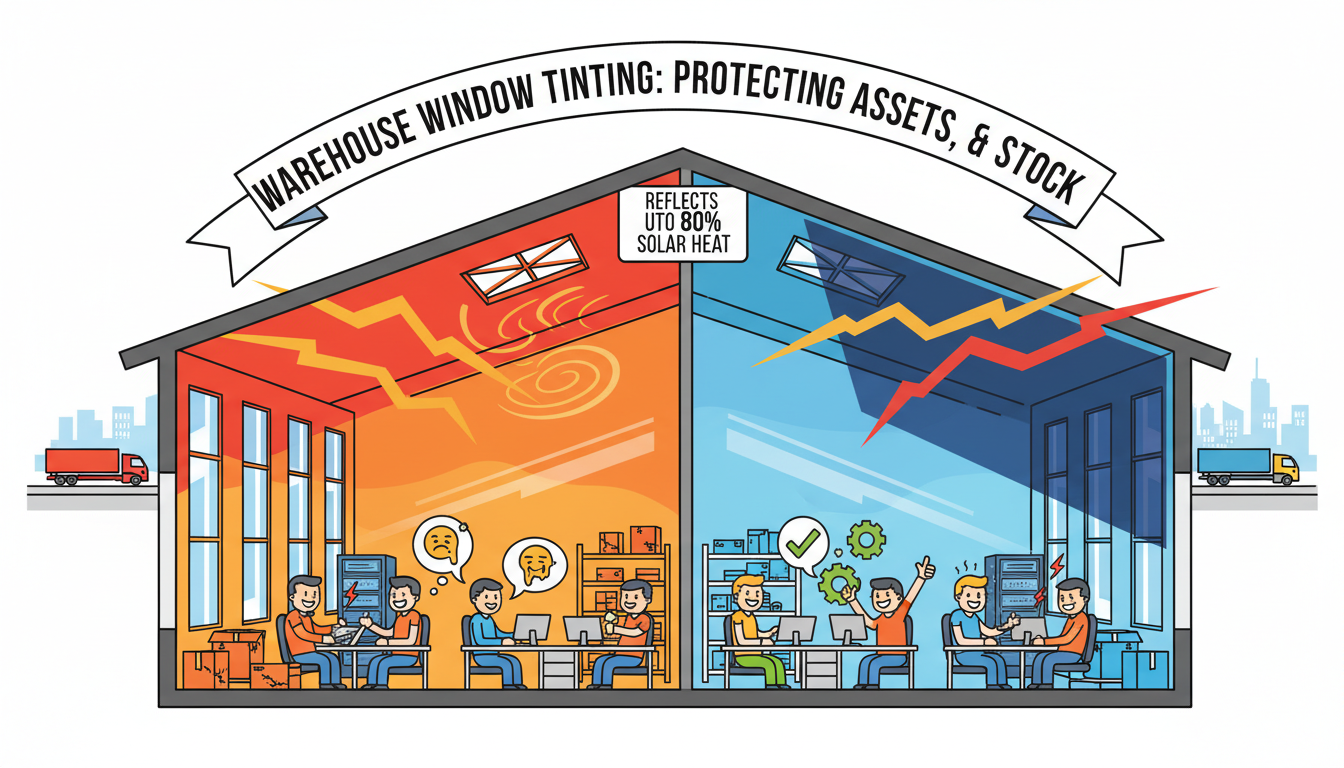
For businesses operating out of large-scale logistics units, particularly those near the M40 and M1 corridors, window tinting for warehouses is a game-changer. Industrial units often feature high-level glazing or roof lights that let in an enormous amount of infrared heat, which rises and gets trapped under the ceiling.
This creates a "heat soak" that leads to two major problems:
-
Staff Safety and Productivity: Research indicates that productivity can fall by as much as 50% when indoor temperatures exceed 24°C. On a hot July afternoon in Northampton, an untreated warehouse mezzanine can easily exceed 30°C.
-
Asset Protection: If you are storing heat-sensitive stock or operating expensive electronics, the uv coming through untreated windows can degrade packaging and hardware.
Industrial window tinting acts as a proactive shield. It reflects up to 80% of solar infrared heat before it even enters the building, maintaining a stable temperature and ensuring your workforce stays productive rather than parched.
The Technical Evidence: G-Values and U-Values
To understand why commercial solar film is so effective, we have to look at the "G-Value" (Solar Factor). The G-Value measures the total solar radiation transmitted through the glass. Standard double glazing in the UK often has a G-Value of around 0.7 to 0.8, meaning 70-80% of the sun's heat is entering your building.
A professional commercial solar application can drop that G-Value significantly, often to below 0.3. This represents a massive reduction in "solar gain." Furthermore, many of our modern window films also improve the U-Value, the measure of how much heat is lost through the glass. In the winter, these films reflect interior heat back into the room, reducing your heating demand. It is a year-round commercial window solution that pays for itself through seasonal efficiency.
ESG and the Net-Zero Target: The Bucks Hook
UK businesses are currently under the microscope regarding their environmental impact. Replacing thousands of square metres of glazing is not only astronomically expensive but also carries a massive "embodied carbon" cost from the manufacturing and disposal of the old units.
Commercial solar film offers a far more sustainable path. It is a retrofit technology that "upcycles" your existing glass, making it perform like high-end, modern solar-control glazing at a fraction of the cost. In many cases, solar control window films are carbon neutral within just one month of installation. For businesses in Buckinghamshire, Oxford, and Guildford trying to hit EPC (Energy Performance Certificate) targets, this is the lowest-hanging fruit on the sustainability tree.

Beyond Heat: Privacy, Safety, and Security
While thermal performance is the main driver, increased privacy is a significant secondary benefit. In high-density office areas in London or sensitive industrial sites in Northampton, a privacy film can prevent prying eyes from scoping out high-value equipment or viewing confidential board-room data.
There is also the vital element of safety. In an industrial setting, accidental glass breakage can be catastrophic. A professional film installation acts as a protective skin. Should the window break, the film holds the shards in place, prevents a "shatter" event, and maintains the building's security until a replacement can be arranged. We call it "passive security", you don't know it’s there until you really need it.
Why Choose BucksTinting for Your Commercial Project?
Managing a large-scale project is entirely different from a residential one. You need a team that understands the logistics of working around a busy office or a 24/7 warehouse. At BucksTinting, we specialise in architectural glass film only. We don't do cars, we don't do vans, and we certainly don't do "mobile" car tinting. Our focus is 100% on the built environment.
We provide a seamless service across the Home Counties:
-
Buckinghamshire: From High Wycombe to Milton Keynes.
-
Oxfordshire: Supporting the science parks and academic institutions.
-
London & Surrey: Focusing on high-end office solar window control.
-
Northamptonshire: Specialising in warehouse window tinting for logistics hubs.
We offer detailed energy surveys and technical data sheets so your facility manager can see the exact projected savings. We aren't just here to stick plastic on your glass; we’re here to optimise your building's performance.
The ROI: Why Your Finance Director Will Love You
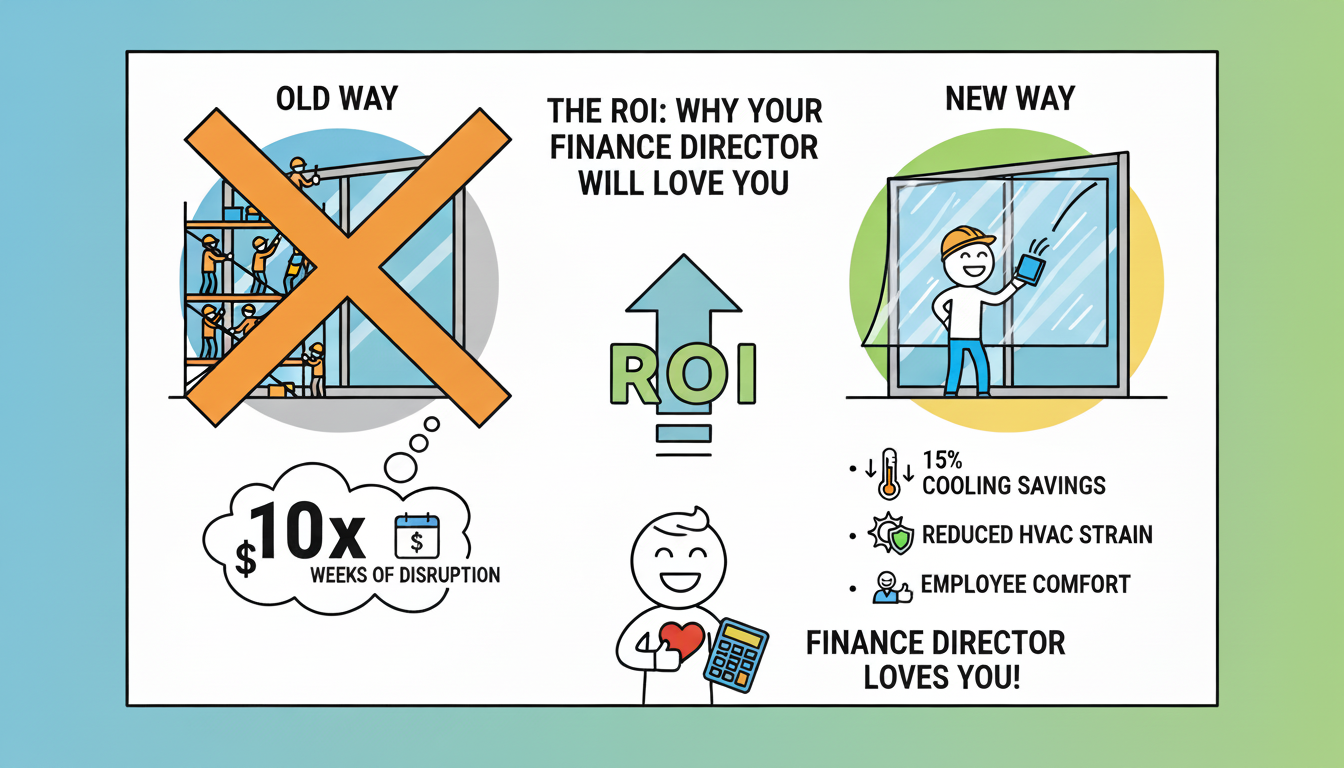
Let's talk numbers. Replacing commercial windows can cost ten times as much as a film installation and takes weeks of disruption. In contrast, most of our commercial solutions can be installed with zero downtime for your staff.
When you factor in:
-
A 15% average reduction in cooling costs.
-
Reduced strain and maintenance on HVAC systems.
-
Protection of interior assets from UV fading (saving on refurbishment).
-
Improved employee retention through better comfort.
The "evidence" is clear: Commercial solar film is one of the most logical investments a business owner can make.
Final Thoughts: Don't Wait for the Next Heatwave
If your building is currently a solar oven in the summer and a heat-leaking sieve in the winter, it’s time to act. Don't wait until your staff are melting and your air con is screaming for mercy. Commercial solar film is a proactive, professional, and permanent solution to the energy crisis facing UK businesses.
Contact BucksTinting today for a professional consultation. We will help you lower commercial cooling costs, meet your ESG targets, and reclaim your workspace. Let’s optimise your business together, and maybe give that hardworking air con unit a well-deserved rest. (Because even machines deserve a break, especially when they're costing you a fortune!)